Supercar Insurance Complete Guide: Protecting Your Investment
Supercar insurance guide: why standard policies fail, how Agreed Value works, top carriers Hagerty, Chubb, Grundy, PURE, plus track, storage and broker tips.…
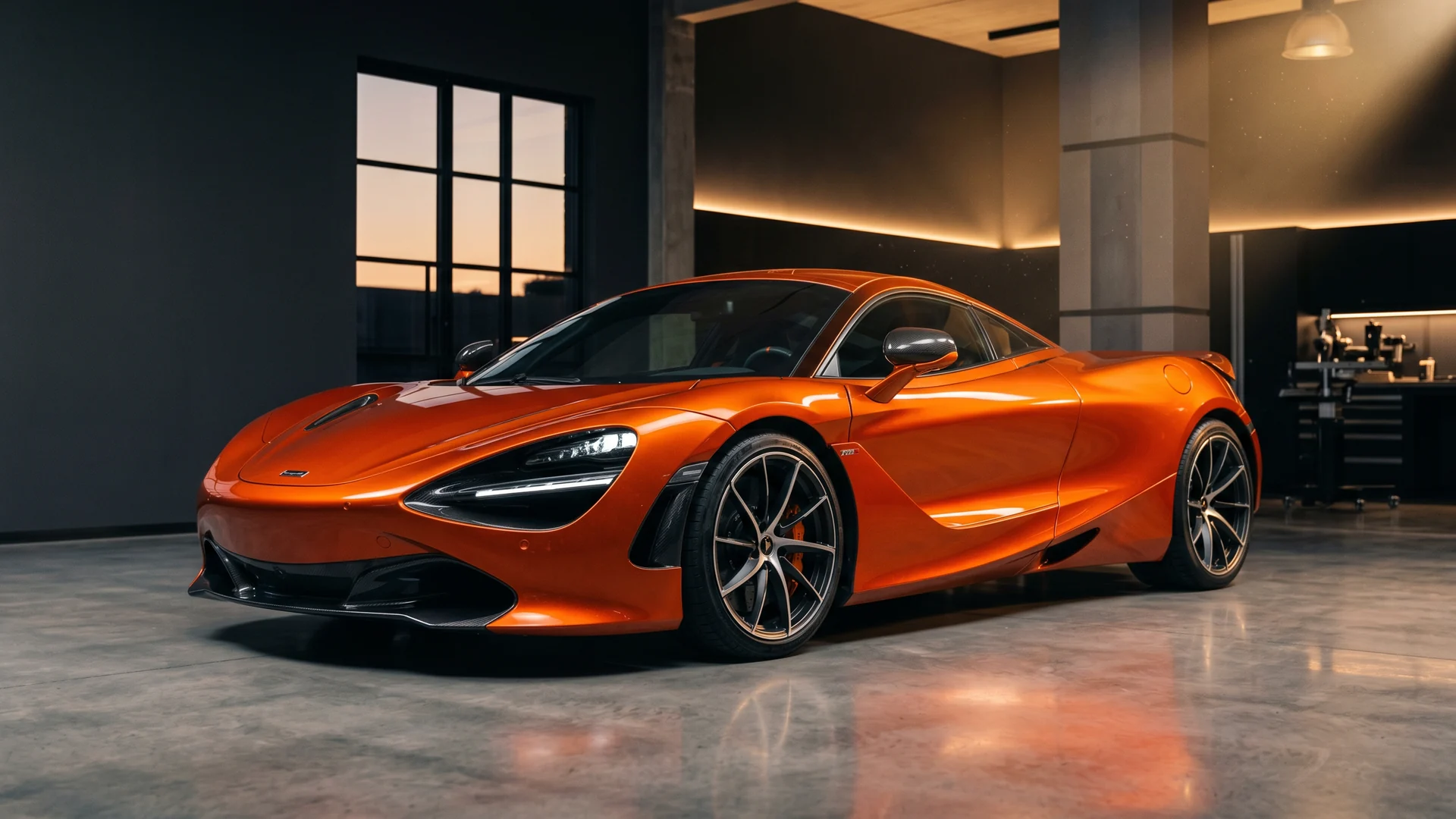
A supercar needs specialty collector car insurance with Agreed Value coverage, because standard carriers cap vehicle value at $150,000 to $250,000 and pay only depreciated Actual Cash Value.
Key Takeaways
- Standard carriers like Progressive, GEICO, State Farm, and Allstate cap vehicle value at $150,000 to $250,000 and settle claims at depreciated Actual Cash Value, leaving six-figure gaps on cars like a $400,000 Ferrari 296 GTB.
- Agreed Value coverage from a specialty carrier pays the pre-set value with no depreciation if the car is totaled, and is the defining feature that distinguishes collector insurance from standard policies.
- Hagerty, Chubb Masterpiece, Grundy, PURE, and AIG Private Client Group are the top five specialty carriers; Hagerty insures over 2 million vehicles, Grundy offers unlimited mileage, and PURE/AIG serve ultra-high-net-worth collections.
- Premiums scale with value, performance tier, and driver age: a $300,000 Ferrari 488 Spider runs roughly $4,000 to $7,000 per year, while drivers under 30 pay two to three times more than a 50-year-old with the same car.
- Track use is universally excluded from every collector policy, so dedicated per-event insurance from providers like Hagerty Racetrack, OpenTrack, or OnTrack at 1% to 2% of Agreed Value is mandatory for any on-track driving.
- Fully enclosed, locked, private garage storage is non-negotiable; street parking voids coverage and a car stolen from a public street will have its claim denied.
- For collections above $2 million, specialist brokers like Aon, Willis Towers Watson, and Marsh Private Client Services negotiate better terms at no direct cost, since their commission is paid by the insurer.
🌐 Also available in: Deutsch
Why Standard Auto Insurance Cannot Cover a Supercar
If you attempt to insure a $400,000 Ferrari 296 GTB or a $600,000 Lamborghini Revuelto through a standard auto insurance carrier, the same company that covers your daily-driver sedan, you will encounter a cascade of obstacles that render standard coverage functionally useless. The first barrier is the maximum vehicle value limit that most standard carriers impose. Progressive, GEICO, State Farm, and Allstate typically cap their standard auto policies at $150,000 to $250,000 in vehicle value. A car worth more than the cap simply cannot be insured through these carriers at any price. The second barrier is the valuation methodology. Standard policies use Actual Cash Value (ACV) settlement, which depreciates the vehicle from its original purchase price based on age, mileage, and condition. A Ferrari 296 GTB that cost $400,000 new may be valued at $280,000 to $320,000 by an ACV policy after two years. If the car is stolen or totaled, you face a six-figure gap between the insurance payout and the cost of replacing the car with a comparable example. The third barrier is usage restrictions. Standard policies often limit annual mileage to levels incompatible with supercar ownership and may contain exclusions for “high-performance driving events” that are broadly worded enough to exclude even non-competitive track experiences.
The solution is the specialty collector car insurance market, a segment dominated by a small number of carriers that have built their underwriting models, claims processes, and policy language around the unique characteristics of exotic, collectible, and high-value automobiles. The defining feature is Agreed Value coverage: at the policy’s inception, you and the insurer agree on the car’s market value. If the car is declared a total loss, that agreed value is the amount paid, no depreciation calculation, no market adjustment, no negotiation. This single feature distinguishes collector insurance from standard insurance and is the reason specialty carriers exist.
The Major Specialty Insurers
Hagerty
Hagerty is the largest and best-known collector car insurer globally, with over 2 million vehicles insured and a market valuation exceeding $3 billion. Hagerty’s core product is an Agreed Value policy designed for vehicles that are not used as daily transportation. The underwriting guidelines require that insured vehicles be stored in a fully enclosed, locked, private garage, street parking, carports, and open storage are not acceptable. Annual mileage is capped, typically at 2,500, 5,000, or 7,500 miles depending on the selected policy tier. Higher limits, up to 10,000 or 15,000 miles, are available for an additional premium, but they require underwriting justification. Hagerty also requires that all licensed drivers in the household have a separate daily-use vehicle insured with a standard carrier, reinforcing that the collector car is a secondary vehicle.
Premium examples: a $300,000 Ferrari 488 Spider garaged in a suburban ZIP code, driven 5,000 miles per year, with a 50-year-old owner holding a clean driving record, costs approximately $4,000 to $7,000 per year. A $600,000 Lamborghini Aventador SVJ under the same conditions runs $7,000 to $12,000. Hagerty also offers Hagerty Racetrack Insurance, a separate, per-event policy underwritten by RLI for HPDE (non-competitive, non-timed) track use. This is critical because no standard or collector auto policy covers any incident occurring on a racing surface.
Chubb Masterpiece
Chubb is the dominant insurer of high-net-worth individuals, and its Masterpiece auto policy offers Agreed Value coverage integrated with the client’s broader insurance portfolio, homeowner’s, excess liability (umbrella), valuable articles, yacht, and aircraft. Chubb’s competitive advantage is integration: a single renewal date, a single dedicated relationship manager, and seamless coordination of coverage across asset classes. Chubb is generally less restrictive about mileage than Hagerty, often writing policies without explicit annual mileage caps, but this flexibility is reflected in premiums typically 20% to 30% higher than Hagerty for equivalent coverage. Chubb also offers worldwide coverage for vehicles shipped overseas, a critical feature for owners who participate in European rallies, concours, or driving tours.
Grundy
Grundy, part of Philadelphia Insurance Companies, has insured collector vehicles since 1947. Its key differentiator is unlimited mileage on most policies, a significant advantage for owners who drive their cars frequently. Grundy’s underwriting guidelines mirror Hagerty’s: an enclosed, locked garage is mandatory, and all household drivers must have a separate daily-use vehicle. Premiums are competitive with Hagerty, often 5% to 15% lower, though the claims process is widely considered more bureaucratic and the roadside assistance program less comprehensive.
PURE and AIG Private Client Group
At the apex of the market, PURE Insurance and AIG Private Client Group serve ultra-high-net-worth families with collections valued in the tens of millions. These policies are not transactional retail products; they require an existing, comprehensive relationship with the carrier spanning home, excess liability, and often multiple specialized lines. Typical minimum portfolio premiums exceed $50,000 to $100,000 annually across all insured lines. The benefit is essentially unlimited flexibility: no mileage caps, worldwide coverage with no notification requirement for overseas transit, agreed value on entire collections under a single policy, and a single dedicated contact who understands the collection and can authorize claims and adjustments without escalation. For a collector with five or more supercars valued above $500,000 each, PURE or AIG becomes the only practical option.
What Determines Your Premium
Vehicle Value and Performance Tier
Premium scales roughly linearly with Agreed Value: a $600,000 car costs approximately twice as much to insure as a $300,000 car, all other factors equal. But insurers also rate by performance tier using proprietary risk models that incorporate horsepower, power-to-weight ratio, 0-60 mph time, top speed, repair costs, theft frequency, and historical claims data by make and model. A Porsche 911 Turbo S ($230,000, 640 hp, 0-60 in 2.6 seconds, all-wheel-drive launch control) may cost more to insure than a Ferrari Roma ($245,000, 612 hp, 0-60 in 3.4 seconds, front-engine rear-drive) despite the Ferrari’s higher MSRP. The Turbo S’s explosive launch capability and all-wheel-drive traction make it statistically more likely to be involved in a single-vehicle loss, the driver accelerates beyond their ability to stop or corner, and the car’s extreme capability masks the risks until it is too late.
Driver Age, Record, and Experience
Driver age is the single most powerful rating factor after vehicle value. Drivers under 30 years old pay the highest premiums, often two to three times the rate of a 50-year-old with the same car and record. Between 30 and 40, rates decline meaningfully as the driver exits the highest-risk actuarial bracket. Drivers over 50 with clean records pay the lowest premiums. Some specialty insurers require documented performance driving school completion for drivers under 35 insuring cars above a certain horsepower threshold, typically 600 or 700 horsepower. Any at-fault accident or moving violation in the past three years increases premiums by 20% to 50%. A DUI conviction makes coverage nearly unobtainable from any specialty carrier for five to seven years. A second DUI effectively makes the driver uninsurable for a high-value vehicle at any price.
Storage Location and Security
Where the car sleeps matters enormously to underwriters. A vehicle garaged in a private, attached, locked garage in a suburban ZIP code with low crime statistics attracts the lowest premiums. A detached garage, carport, or storage facility may incur surcharges. Collector car storage facilities must meet specific security standards, 24/7 monitoring, fire suppression (sprinkler system), individual locked bays, climate control, to qualify for the lowest rates. Street parking is universally prohibited under every collector car policy. A car stolen from a public street will have its claim denied if the policy mandates enclosed garage storage, which all collector policies do. This exclusion is absolute and non-negotiable.
Track Use, Exclusions, and Per-Event Coverage
The single most important exclusion to understand in any collector car policy is track use of any kind. Standard and collector policies exclude all loss, damage, or liability arising from use of the vehicle on any “racing surface,” “track,” “circuit,” “course,” or “facility designed for competitive driving.” This exclusion is broadly worded and absolute. It applies to competitive wheel-to-wheel racing, timed time-trial events, non-competitive HPDE (High Performance Driver Education) lapping days, parade laps, and even driving on the access roads of a racing facility. If the car is on a track property and it is damaged, your collector policy will not pay. Period.
If you plan to take your supercar on a track, even once, you must purchase dedicated per-event track insurance. The three major providers are Hagerty Racetrack Insurance (underwritten by RLI), OpenTrack, and OnTrack Insurance. Premiums are calculated as 1% to 2% of the Agreed Value per event. A $300,000 car costs $3,000 to $6,000 to insure for a two-day HPDE event. Deductibles are typically 5% to 10% of Agreed Value, $15,000 to $30,000 on that $300,000 car. Track insurance covers collision damage only, not mechanical failure. An engine that overheats, detonates, or seizes due to a mechanical defect is not covered.
Multi-Car and Collection Policies
Owners with multiple supercars should explore collection policies that aggregate all vehicles under a single policy with a single renewal date. The discount versus insuring each car separately is typically 10% to 25%. Collection policies also simplify administrative overhead, adding a new acquisition or removing a sold car involves a single phone call or email rather than opening and closing separate policies. The threshold for collection treatment is typically three or more vehicles, though some carriers will write collection policies for two cars if the aggregate value exceeds $500,000. For collections valued above $2 million, it is advisable to engage an insurance broker who specializes in high-net-worth personal lines. Brokers at firms like Aon Private Risk Management, Willis Towers Watson, and Marsh Private Client Services maintain relationships with all specialty carriers and can negotiate terms, higher agreed values, broader usage allowances, multi-year rate guarantees, that are not available to consumers purchasing directly from the carrier. The broker’s commission is paid by the insurance company, not the client, so there is no direct cost for their services.
Key Takeaways
- Standard auto insurance is structurally incapable of covering a supercar: Value caps ($150K-$250K), ACV depreciation settlement, and usage restrictions make standard policies unsuitable. Agreed Value coverage from a specialty carrier is mandatory.
- Hagerty, Chubb, Grundy, PURE, and AIG are the top five specialty carriers: Hagerty is the largest and most accessible. Chubb and PURE/AIG serve high-net-worth clients with comprehensive portfolio integration. Grundy offers unlimited mileage.
- Premiums scale with value, performance tier, and driver age: $4K-$7K/year for a $300K mid-tier supercar with a clean record. Drivers under 30 pay 2x-3x more. Multi-car and clean-record discounts are significant.
- Track use is universally excluded: Per-event track insurance at 1-2% of value is mandatory for any on-track driving, including non-competitive HPDE. No exceptions.
- Garage storage is non-negotiable: Fully enclosed, locked, private garage. Street parking voids coverage. Storage facilities must meet security standards.
- For collections above $2M, hire a specialist broker: Aon, Willis, Marsh. Better terms, broader coverage, single renewal date, no direct cost to you. The premium savings from a broker-negotiated collection policy typically exceed any independent effort.
Understanding Policy Exclusions: The Fine Print That Matters
The coverage exclusions buried in your collector car policy are as important as the coverage limits printed on the declarations page. Beyond the universal track exclusion, common exclusions include: business use, if you use the car for any commercial purpose, including Turo rental, film or photography production, or promotional events, your collector policy will not cover a loss. If you plan to monetize the car in any way, you need a commercial auto policy, which is considerably more expensive. Mechanical breakdown, collector policies cover collision, theft, fire, and weather damage. They do not cover engine failure, transmission failure, or any mechanical defect unrelated to a covered peril. An engine that throws a connecting rod through the block due to an oil pump failure is a maintenance expense, not an insurance claim. Wear and tear, gradual deterioration, paint fading, leather cracking, and any damage that occurs over time rather than in a single incident is excluded. Diminution of value, if your car is repaired after an accident, the difference between its pre-accident value and post-repair value is generally not covered. This is a significant gap because a supercar with accident history on its Carfax or AutoCheck report typically trades at a 10% to 25% discount to an identical car with a clean history. For a $400,000 Ferrari, that is a $40,000 to $100,000 loss that insurance does not cover. Some high-net-worth carriers are beginning to offer diminution-of-value coverage as an endorsement, but it is not standard and must be specifically requested.
The Claims Process: What Actually Happens When You Need It
If you are unfortunate enough to need your collector car insurance, understanding the claims process in advance reduces stress during an already stressful situation. Call the insurer immediately from the scene, do not wait until you get home. Photograph everything: the damage to your car, the damage to any other vehicles or property involved, the surrounding scene, road conditions, weather, and any relevant signage or traffic signals. If another driver is involved, photograph their license, insurance card, and the damage to their vehicle. Do not admit fault or discuss the cause of the accident beyond exchanging information, let the insurance adjusters determine liability. Obtain a copy of the police report if one is filed. For a specialty carrier like Hagerty or Chubb, the claims process is generally more personalized than with a standard carrier. You will be assigned a dedicated adjuster who specializes in high-value vehicles. They will arrange an inspection at a shop of your choice, typically a manufacturer-certified collision center or a high-end independent shop that specializes in your brand. Do not allow a standard body shop to repair a supercar. The materials (carbon fiber, aluminum, titanium), the paint processes (multi-stage tri-coat finishes, matte clear coats, Paint-to-Sample custom colors), and the calibration requirements (parking sensors, cameras, radar units for adaptive cruise control and collision avoidance) demand factory-certified facilities with brand-specific training and equipment. Insist on a manufacturer-certified repair facility. If your insurer pushes back, escalate to a supervisor, specialty carriers understand this requirement and will accommodate it, but you may need to be persistent.
Insurance for International Events and Overseas Transport
If you participate in European rallies, Middle Eastern tours, or ship your car internationally for events, your insurance needs expand beyond domestic coverage. Most US collector car policies, including Hagerty and Grundy, provide coverage only within the United States and Canada. Chubb’s Masterpiece policy and PURE’s high-net-worth auto policy offer worldwide coverage as a standard feature, which is a significant advantage for internationally active collectors. If your policy does not include international coverage, you must purchase a separate marine cargo insurance policy for the shipping period and a temporary local policy for the destination country. Marine cargo insurance covers the vehicle during ocean transit against damage, theft, and total loss. Premiums are approximately 0.5% to 1.5% of the vehicle’s value per voyage. A $500,000 car costs $2,500 to $7,500 to insure for a transatlantic round-trip. The shipping company may offer insurance, but it is often underwritten by a separate carrier, and the coverage limits and exclusions should be reviewed carefully. Temporary local coverage in the destination country can be arranged through international brokers like Chubb, AIG, or specialty motorsport insurers who have relationships with European and Middle Eastern underwriters. Plan for this coverage at least 30 days before the shipping date, international insurance requires underwriting time that domestic policies do not.
Theft Prevention and Recovery Technology
Supercar theft is a specialized criminal enterprise. Thieves target exotic vehicles for export to markets with weak registration enforcement, for parting out (a stolen Ferrari is worth far more as individual components than as a complete car, because legitimate parts are controlled by the manufacturer), or for ransom (steal the car, demand payment for its return). Physical security measures include a locked garage, the universal requirement of all collector policies, and can be supplemented with a GPS tracking system. Factory-installed systems (Ferrari’s antitheft system, Porsche’s Car Connect) are adequate but can be defeated by professional thieves who know where the factory GPS module is located. Aftermarket systems from LoJack, Guidepoint, or DroneMobile add a secondary, hidden GPS tracker with its own battery, making it harder to locate and disable. Some owners install multiple independent trackers in different locations throughout the car, if a thief finds and disables one, the others continue transmitting. A kill switch, a hidden switch that interrupts the fuel pump, starter, or ECU power, adds a layer of physical deterrence that electronic systems alone cannot provide. A professional installation of a hidden kill switch costs $500 to $1,500 and may also earn a small insurance discount if the insurer recognizes the security enhancement. Inform your insurer of any aftermarket security installations, they may reduce your premium and will appreciate the documentation if the car is ever stolen.
Frequently Asked Questions (FAQ)
Why can't I insure a Ferrari 296 GTB through standard auto insurance like GEICO or State Farm?
Standard carriers such as Progressive, GEICO, State Farm, and Allstate cap policies at $150,000 to $250,000 in vehicle value, so a $400,000 car cannot be insured at any price. They also use Actual Cash Value settlement, which depreciates the car, and impose mileage and high-performance driving restrictions incompatible with supercar ownership.
What is Agreed Value coverage for collector cars?
Agreed Value coverage means you and the insurer agree on the car's market value when the policy starts. If the car is declared a total loss, that agreed amount is paid with no depreciation, no market adjustment, and no negotiation. This single feature distinguishes specialty collector insurance from standard Actual Cash Value policies.
How much does Hagerty insurance cost for a supercar?
Hagerty premiums depend on value, driver, and storage. A $300,000 Ferrari 488 Spider garaged in a suburban ZIP code, driven 5,000 miles per year by a 50-year-old with a clean record, costs roughly $4,000 to $7,000 annually. A $600,000 Lamborghini Aventador SVJ under the same conditions runs $7,000 to $12,000.
Does collector car insurance cover driving my supercar on a track?
No. Every standard and collector policy absolutely excludes all loss or damage on any racing surface, track, or circuit, including non-competitive HPDE lapping days and even access roads. You must buy dedicated per-event track insurance from Hagerty Racetrack, OpenTrack, or OnTrack at 1% to 2% of Agreed Value, which covers collision only, not mechanical failure.
Which collector car insurer offers unlimited mileage?
Grundy, part of Philadelphia Insurance Companies and insuring collector vehicles since 1947, offers unlimited mileage on most policies. This benefits owners who drive frequently. Its premiums are often 5% to 15% lower than Hagerty, though the claims process is considered more bureaucratic and roadside assistance less comprehensive. An enclosed, locked garage remains mandatory.
What storage requirements must I meet for supercar insurance?
Collector policies require a fully enclosed, locked, private garage; street parking is universally prohibited and voids coverage. A car stolen from a public street will have its claim denied. Detached garages, carports, or storage facilities may incur surcharges, and storage facilities need 24/7 monitoring, fire suppression, locked bays, and climate control for the lowest rates.
Do I need special insurance to ship my supercar overseas for a European rally?
Most US collector policies, including Hagerty and Grundy, cover only the US and Canada. Chubb Masterpiece and PURE offer worldwide coverage as standard. Otherwise you need separate marine cargo insurance for transit, at roughly 0.5% to 1.5% of value per voyage, plus temporary local coverage. Arrange it at least 30 days before shipping.
When should a supercar collector hire a specialist insurance broker?
For collections valued above $2 million, engage a high-net-worth broker such as Aon Private Risk Management, Willis Towers Watson, or Marsh Private Client Services. They maintain relationships with all specialty carriers and negotiate higher agreed values, broader usage, and multi-year rate guarantees. Their commission is paid by the insurer, so there is no direct cost to you.
More from Motorsport

Future of Supercars – Electric Revolution and Beyond
The future of supercars: Ferrari’s 2025 electric flagship, Porsche’s synthetic eFuel, Rimac’s record-breaking EVs and why the V12 su…
Supercar Tuning Performance Guide – Extracting Maximum Power
Supercar tuning guide: how a Ferrari 488, Porsche 911 Turbo S or McLaren 720S gains power, with ECU, exhaust and turbo costs plus warranty and resale …

Supercar Technology Innovation Guide – The Future of Performance
Supercar technology guide: how carbon-fiber tubs, active aero, hybrids, dual-clutch gearboxes and software shape performance in the McLaren, Ferrari a…