Supercar Investment Guide: Which Models Appreciate in Value
Supercar investment guide: which models appreciate, from LaFerrari and Porsche GT cars to rare Ferrari V12s. Learn what drives value, depreciation, and holding.…
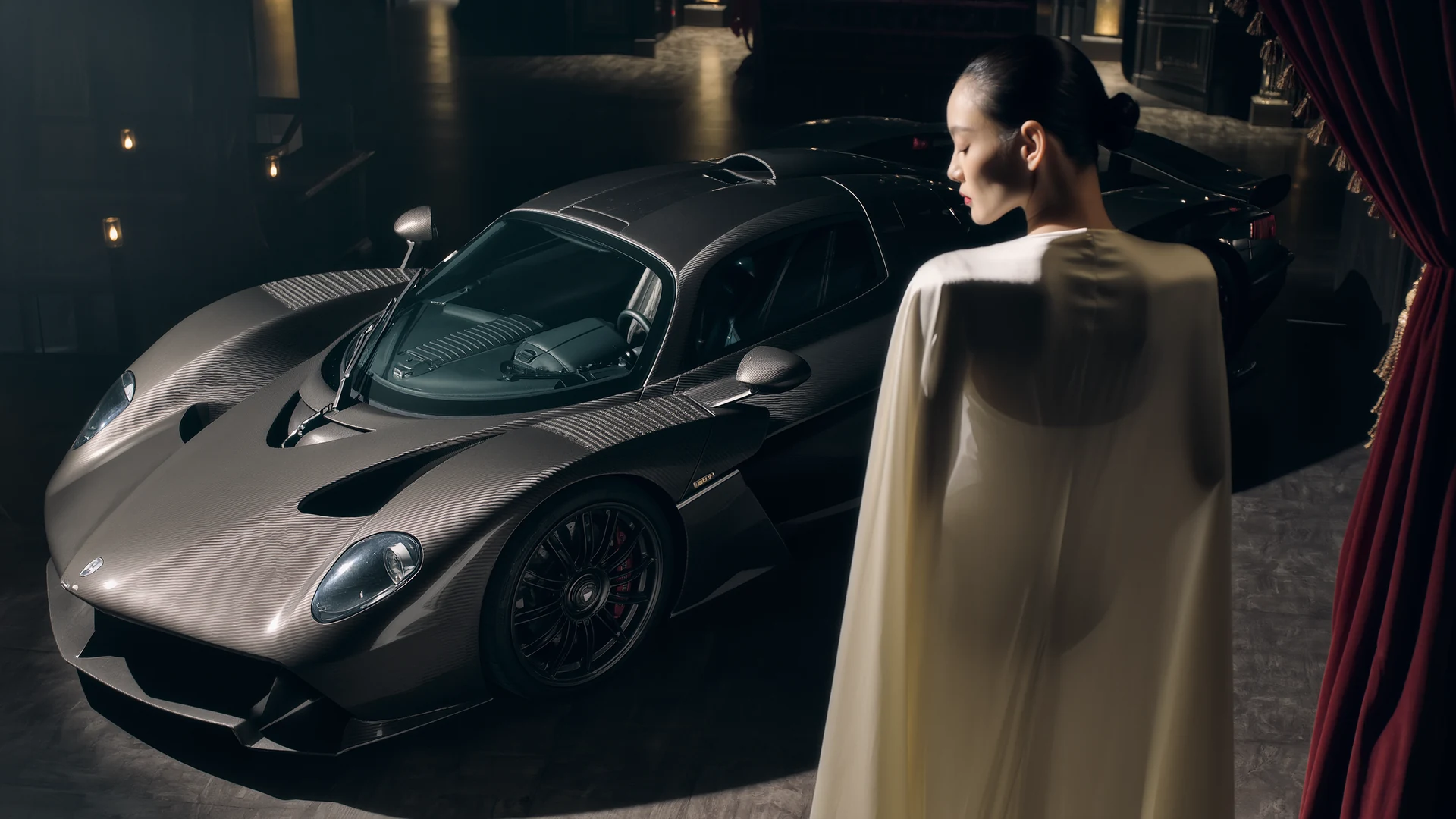
Only a narrow subset of supercars appreciates: limited-production hypercars, Porsche GT division cars, and rare Ferrari V12s, while high-volume models like the McLaren 570S depreciate.
Key Takeaways
- The Ferrari LaFerrari (499 coupes plus 209 Aperta spiders) stickered around $1.4 million in 2013 and now trades between $3.5 million and $5.0 million, a 150% to 250% gain.
- Porsche GT Division cars are the most reliable appreciators: the 600-unit 997.2 GT3 RS 4.0 rose from $185,000 in 2011 to $500,000 to $700,000 today.
- Production volume is the decisive variable: Ferrari built roughly 12,000 488 variants and roughly 10,000 Aston Martin DB11s, and high volume drives depreciation while scarcity drives appreciation.
- The manual transmission premium is large but fragile: roughly 30 manual Ferrari 599 GTB Fioranos command a $200,000 to $400,000 premium over F1 examples.
- Specification, heritage colors, complete documentation, and Ferrari Classiche certification separate investment-grade cars from the rest, with provenance adding 10% to 50%-plus premiums.
- The realistic minimum holding period is 5 to 10 years, with 10 to 20 years optimal, because auction premiums, commissions, transport, insurance, and storage erase short-term gains.
- Pre-1973 vintage Ferraris like the 250 and 275 series have compounded at roughly 10% to 15% annually over 30 years, outperforming the S&P 500.
🌐 Also available in: Deutsch
Which Supercars Actually Appreciate
The notion that supercars are investments is seductive, occasionally true, and widely misunderstood. For every owner who bought a low-mileage Porsche Carrera GT in 2010 for $350,000 and sold it in 2025 for $1.5 million, there are dozens of owners who bought a new McLaren 570S for $190,000 and watched it depreciate to $100,000 over five years. The difference between a supercar that appreciates and one that depreciates is not chance, it is a function of production volume, brand equity, market timing, and specification. Understanding these variables separates profitable ownership from expensive disappointment.
The clearest appreciation stories come from limited-production hypercars with strong brand equity and motorsport lineage. The Ferrari LaFerrari, 499 coupes plus 209 Aperta spiders, stickered at approximately $1.4 million in 2013. Today, examples trade between $3.5 million and $5.0 million, representing a gain of 150% to 250% over roughly 13 years. The McLaren P1 (375 units) listed at $1.15 million and now trades at $1.5 million to $2.2 million, a more modest but still positive return. The Porsche 918 Spyder (918 units) started at $845,000 for the standard car and $929,000 with the Weissach Package; Weissach-equipped 918s now command $1.4 million to $1.8 million. The common thread across all three: they are the singular hybrid hypercar from each brand, produced in genuinely limited numbers at a moment of technological transition that will not be repeated. They are the concorde moments of the automotive world, pinnacle achievements of an era that is ending.
Below the hypercar tier, Porsche GT Division products have been the most reliable appreciation generators. The 997.2 GT3 RS 4.0, 600 units worldwide, the final Mezger-engine 911, stickered at $185,000 in 2011 and now trades at $500,000 to $700,000. The 991.2 GT2 RS with Weissach Package listed at $325,000 and consistently trades above $400,000, with sub-1,000-mile examples reaching $500,000+. Even the mass-produced 991.1 GT3 RS, over 4,500 units built, has held steady near or above its $176,000 original MSRP a decade after launch. The common element: naturally aspirated flat-six engines, manual or PDK transmissions with genuine motorsport DNA, and Porsche’s disciplined production management that consistently produces slightly fewer GT cars than the market demands.
Ferrari’s naturally aspirated V12 front-engine grand tourers represent another appreciation pocket. The F12tdf (799 units) stickered at $490,000 and now trades at $900,000 to $1.3 million. The 599 GTO (599 units) listed at $450,000 in 2010 and now commands $700,000 to $900,000. The 812 Competizione, 999 coupes and 599 Competizione A Targas, stickered at $603,000 and $666,000 respectively. Allocations were so oversubscribed that secondary-market transactions for build slots occurred at $200,000 to $300,000 premiums before any cars were delivered. Ferrari’s V12 lineage is the most consistently appreciating series-production car line in the world, and with electrification rendering naturally aspirated V12s increasingly untenable, the existing fleet of twelve-cylinder Ferraris likely represents the peak of this asset class.
The Depreciation Reality
For every appreciating supercar, dozens follow a predictable depreciation curve. A Ferrari 488 GTB that cost $260,000 new in 2016 is now worth $180,000 to $220,000, a loss of 15% to 30% over 8 years, which is actually quite good by automotive standards. A McLaren 570S stickered at $190,000 in 2016 and now trades at $100,000 to $125,000, a decline of 34% to 47%. An Aston Martin DB11 V12 cost $220,000 new in 2017 and can be purchased today for $90,000 to $115,000, a staggering 48% to 59% decline. The critical variable across all three examples is production volume and brand exclusivity. Ferrari produced roughly 12,000 488 variants across all body styles. McLaren produced perhaps 8,000 to 10,000 Sports Series cars. Aston Martin built approximately 10,000 DB11s. Compare these figures to the 799-unit F12tdf and the depreciation pattern becomes self-evident: scarcity drives appreciation; abundance drives depreciation.
The Manual Transmission Premium
As automatic and dual-clutch transmissions became ubiquitous, the manual gearbox transitioned from the affordable base option to the collector’s holy grail. A Ferrari 599 GTB Fiorano with the six-speed gated manual is among the most extreme examples. Ferrari built approximately 30 manual 599s out of roughly 3,500 total production. The manual cars now trade at a $200,000 to $400,000 premium over equivalent F1 automated-manual examples, a premium that can exceed the car’s total original value. A Lamborghini Murciélago with the rare six-speed manual commands similarly enormous premiums. The Porsche 911 R, essentially a 991.1 GT3 RS engine in a manual-gearbox, Touring-body 911, stickered at $185,000 in 2016. Within months of the first deliveries, examples were trading at $400,000 to $500,000, a speculative bubble that Porsche deliberately punctured by releasing the 991.2 GT3 Touring with a manual gearbox at $144,000. The 911 R has since settled around $300,000 to $350,000, demonstrating both the power and the fragility of the manual-transmission premium. The lesson: rarity drives the premium, but if the manufacturer produces a mechanically similar alternative, the premium can evaporate quickly.
Color, Specification, and Provenance
Specification is everything in the investment-grade market. A Rosso Corsa Ferrari will always outsell a brown one. A Porsche GT car in Paint-to-Sample, a factory option costing $12,000 to $25,000, can add $20,000 to $50,000 to the car’s value if the color is historically significant (Gulf Blue, Signal Yellow, Irish Green, Oak Green Metallic, Mexico Blue, Riviera Blue, Viola Metallic). But a Paint-to-Sample car in an unpopular shade, Olive Green, Mint, Pastel Orange, can take months longer to sell and may actually trade at a discount to a Guards Red or GT Silver car. The safest resale colors are the ones associated with each brand’s motorsport and marketing heritage: Rosso Corsa, Giallo Modena, and Rosso Mugello for Ferrari; Verde Mantis, Arancio Borealis, and Bianco Icarus for Lamborghini; Guards Red, GT Silver, Chalk, and Black for Porsche.
Provenance, documented ownership history, adds substantial value at the highest end of the market. A Ferrari previously owned by a celebrity, professional racing driver, or prominent collector can carry a 10% to 50%+ premium. Steve McQueen’s 1963 Ferrari 250 GT Lusso sold for $2.3 million in 2007, roughly three times the value of a non-McQueen Lusso at the time. The Ferrari Classiche certification program, which authenticates a car’s matching-numbers status and confirms its factory-original specification, is increasingly required for top-tier valuation. A Ferrari without Classiche Red Book certification will trade at a meaningful discount, typically 5% to 15%, to an identical certified car. The certification process costs $5,000 to $15,000 depending on the car’s age and complexity, and it involves a factory inspection in Maranello. For any Ferrari worth over $200,000, Classiche certification is an investment that returns its cost multiple times over at resale.
Investment Strategy: Buy, Hold, Document
Supercar investment is not a short-term trading game. The frictional costs are enormous: auction buyer’s premiums of 5% to 12%, seller’s commissions of 5% to 10%, transport, insurance, storage, and maintenance. A car that appreciates 20% over two years may yield a net return near zero after these costs. The realistic minimum holding period for a genuine investment-grade supercar is 5 to 10 years. The optimal window is 10 to 20 years, long enough to absorb transaction costs and ride out market cycles, short enough that the car has not yet entered the purely vintage phase where maintenance costs escalate dramatically.
Documentation is the cheapest and most effective form of value preservation. Every service record, every invoice, the original window sticker, the original battery tender, the car cover, the complete book and manual set, all keys including the red master key (on Ferraris), the toolkit, the tire inflator, the factory-supplied luggage (if applicable), completeness of the original accessories can add 5% to 10% to the value of a collectible supercar. A Ferrari without its red master key and key code card is effectively unsellable at full market value because the car cannot be reprogrammed with new keys without the master. Store the car in a climate-controlled environment with humidity between 40% and 55% and temperature between 60 and 75 degrees Fahrenheit. Drive it gently and periodically, cars that sit for years develop seal failures, flat-spotted tires, fuel-system varnish, and corrosion that cost far more to rectify than the value of gentle, periodic use. A car driven 500 miles per year is healthier than a car driven zero miles per year.
Market Data and Current Trends
The Hagerty Market Rating and the K500 Index are the two primary benchmarks for collector car market health. After the COVID-era surge that saw values spike 25% to 40% across many segments from mid-2020 through early 2022, driven by low interest rates, stimulus-fueled liquidity, and a surge of new collectors entering the market through online auctions, the market has corrected. Hagerty’s broad-market index shows a 5% to 10% softening through 2025-2026. The steepest declines are concentrated in post-2000 mass-production supercars (McLaren Sports Series, Aston Martin DB11, base Ferrari California) and the strongest resilience is in pre-1973 vintage Ferraris and pre-1998 air-cooled Porsche 911s. The takeaway is consistent across every market cycle in automotive history: rarity, condition, and provenance matter more than market timing. Buy the best car you can afford, hold it through the cycle, and do not attempt to time the automotive market any more than you would attempt to time the stock market.
Key Takeaways
- Only a narrow subset of supercars actually appreciate: Hypercars (LaFerrari, P1, 918), Porsche GT division products, and limited-production Ferrari V12s. Everything else depreciates, plan your purchase with this reality in mind.
- Production volume is the single most important variable: Ferrari’s supply discipline protects residuals. McLaren and Aston Martin’s volume approach destroys them. Always check how many were built before you buy.
- The manual transmission premium is real and likely permanent: Rare manual variants trade at 30% to 100%+ premiums. No manufacturer is developing new manual supercars at volume, existing examples are going extinct.
- Specification separates the investment-grade cars from the rest: Heritage colors, key options, Classiche certification, and complete documentation are the difference between a car that sells in a week and a car that sits for a year.
- Minimum 5-10 year holding period: Transaction costs destroy short-term gains. Buy, hold, document, store properly, and drive gently but regularly. Time in the market beats timing the market.
The COVID-Era Bubble and Its Lessons
The collector car market experienced an extraordinary boom from mid-2020 through early 2022, driven by a confluence of factors that are unlikely to repeat. Central bank interest rates near zero made alternative assets attractive relative to bonds and savings accounts. Stimulus payments and restricted travel spending left wealthy households with surplus capital. Online auction platforms, Bring a Trailer, Collecting Cars, PCarMarket, democratized access to the collector car market, bringing in thousands of new buyers who had never attended a physical auction. Values across nearly every segment of the market rose 25% to 40% in 18 months. Porsche 911 values were particularly frothy, a 1997 911 Turbo (993) that traded at $150,000 in 2019 briefly touched $300,000 in early 2022 before settling back to approximately $200,000. The correction that followed is an important case study. As interest rates rose through 2022 and 2023, the cost of financing a collector car increased dramatically. A $300,000 car financed at 4% in 2021 carried a lower monthly payment than the same car at 8% in 2024. The buyer pool contracted, particularly for financed purchases at the $100,000 to $300,000 level where leverage is most common. The market has stabilized in 2025-2026, with values settling roughly 10% to 15% below the 2022 peak for most segments. The enduring lesson: do not chase a rising market. The buyers who purchased at the 2022 peak are underwater on their purchases and will be for years. The buyers who purchased in 2019 or who waited until 2024 are in far stronger positions. Market timing matters, but patience matters more. The collector car market rewards buyers who purchase during periods of economic uncertainty and hold through the cycle.
Vintage Supercars: The Blue-Chip Asset Class
If you have the capital and the patience, the most reliable appreciation in the automotive world has come from pre-1973 vintage Ferraris, specifically, the 250 series (250 GT, 250 GTO, 250 LM, 250 SWB) and 275 series (275 GTB, 275 GTB/4). These cars have appreciated at a compound annual growth rate of approximately 10% to 15% over the past 30 years, outperforming the S&P 500 over the same period. The entry point is now prohibitive, a serviceable 250 GT Boano coupe starts around $400,000, and a 275 GTB/4 exceeds $2.5 million, but for buyers with the means, these cars represent the closest thing to a guaranteed appreciating asset in the automotive world. Pre-1998 air-cooled Porsche 911s, particularly the 1973 911 Carrera RS 2.7, the 1989 911 Speedster, and the 1997-1998 993 Turbo S, have been the strongest non-Ferrari performers. A 1973 Carrera RS 2.7 that cost $50,000 in 2000 is now a $700,000 to $900,000 car. The fundamental driver of these appreciation curves is irreplaceable: cars built before modern safety, emissions, and manufacturing constraints possess character and sensory qualities that cannot be replicated under contemporary regulations.
Alternative Investment Structures: Fractional Ownership and Funds
For investors who want exposure to the supercar market without the full capital commitment and logistical burden of sole ownership, fractional ownership platforms have emerged as an accessible alternative. Rally Rd. and Masterworks (the latter focused on fine art but with an automotive-adjacent model) allow investors to purchase shares in individual high-value assets. Rally Rd. has offered shares in cars including a 1995 McLaren F1 and a 1955 Mercedes-Benz 300SL Gullwing, with minimum investments as low as $25 to $100 per share. The platform handles acquisition, storage, maintenance, and eventual sale of the asset, distributing proceeds to shareholders. The trade-off is control: fractional owners do not drive or display the car, and they have limited influence over when it is sold. The returns are also less tax-efficient than direct ownership, gains are typically taxed as ordinary income rather than capital gains.
A more sophisticated vehicle is the collector car investment fund, modeled on private equity structures. Funds like Premier Financial Services’ Diversified Automobile Investment Fund and the now-closed Classic Car Fund pool investor capital to acquire, manage, and eventually liquidate portfolios of investment-grade automobiles. These funds typically require minimum commitments of $250,000 to $1 million, charge management fees of 1% to 2% of assets annually plus 20% of profits (the standard hedge fund fee structure), and have lockup periods of 5 to 10 years. The performance track record is mixed, some funds have delivered double-digit annualized returns; others have underperformed the broader Hagerty index after fees. The critical due diligence questions for any collector car fund: who is selecting the cars and what is their track record? What is the fee structure and how does it compare to the expected gross return? What is the exit strategy, auctions, private sales, or dealer consignment? And most importantly, what happens if the fund cannot sell its cars at projected values within the fund’s life? Illiquidity is the fundamental risk of any alternative asset fund, and collector cars are among the most illiquid assets in existence.
The Next Generation: Millennial and Gen Z Collectors
The collector car market is undergoing a generational shift that will reshape which cars appreciate over the next 20 years. Baby Boomers, who drove the market for 1950s-1970s American muscle cars, pre-war classics, and 1980s European sports cars, are aging out of active collecting. Millennial and Gen Z collectors, who came of age with the Fast & Furious franchise, Gran Turismo and Forza video games, and the 1990s-2000s Japanese performance car era, are driving demand for a different set of vehicles. The Porsche 911 (993 and 996 generations), the Acura NSX (first generation), the BMW E30 M3, the Nissan Skyline GT-R (R32, R33, R34), and the Ferrari F355 and 360 Modena are the cars that Millennial collectors covet. A 1997 Acura NSX that sold for $40,000 in 2015 now trades at $80,000 to $120,000. A 1995 Ferrari F355 Berlinetta that was a $55,000 car in 2015 is now $100,000 to $130,000. The R34 Nissan Skyline GT-R, newly legal for US import under the 25-year rule, has exploded from $60,000 in 2020 to $150,000 to $250,000 for clean examples. The lesson for investors: the cars that will appreciate most over the next decade are the cars that today’s 35-to-45-year-olds dreamed about as teenagers. Identify the poster cars of the 1990s and early 2000s, buy the best examples you can find, and wait.
Frequently Asked Questions (FAQ)
Which supercars actually appreciate in value as investments?
Only a narrow subset appreciates: limited-production hybrid hypercars such as the LaFerrari, McLaren P1, and Porsche 918 Spyder; Porsche GT Division products; and limited-production naturally aspirated Ferrari V12 grand tourers like the F12tdf and 599 GTO. Everything else, especially high-volume models, follows a predictable depreciation curve.
Why does the McLaren 570S depreciate while the Ferrari F12tdf appreciates?
The difference is production volume and brand exclusivity. McLaren built perhaps 8,000 to 10,000 Sports Series cars, so the 570S fell from $190,000 in 2016 to $100,000 to $125,000 today. The F12tdf was limited to 799 units and now trades at $900,000 to $1.3 million. Scarcity drives appreciation; abundance drives depreciation.
How much is the manual transmission premium on a Ferrari 599 GTB Fiorano?
Ferrari built approximately 30 manual 599 GTB Fioranos with the six-speed gated manual out of roughly 3,500 total. These manual cars now trade at a $200,000 to $400,000 premium over equivalent F1 automated-manual examples, a premium that can exceed the car's original value. Rarity drives the premium, but a similar alternative can make it evaporate.
What is Ferrari Classiche certification and is it worth getting for investment?
Ferrari Classiche certification authenticates a car's matching-numbers status and confirms its factory-original specification. It costs $5,000 to $15,000 and involves a factory inspection in Maranello. A Ferrari without Red Book certification trades at a 5% to 15% discount, so for any Ferrari worth over $200,000 it returns its cost multiple times at resale.
How long should you hold a supercar investment before selling?
The realistic minimum holding period is 5 to 10 years, with 10 to 20 years considered optimal. Frictional costs are enormous: auction buyer's premiums of 5% to 12%, seller's commissions of 5% to 10%, plus transport, insurance, storage, and maintenance. A car appreciating 20% over two years may yield near-zero net return after these costs.
Which paint colors hold value best on a Porsche or Ferrari supercar?
The safest resale colors are tied to each brand's motorsport heritage: Rosso Corsa, Giallo Modena, and Rosso Mugello for Ferrari; Verde Mantis, Arancio Borealis, and Bianco Icarus for Lamborghini; and Guards Red, GT Silver, Chalk, and Black for Porsche. Paint-to-Sample in significant colors can add $20,000 to $50,000, but unpopular shades may trade at a discount.
What did the COVID-era collector car bubble teach investors about market timing?
From mid-2020 through early 2022, values rose 25% to 40% in 18 months, driven by near-zero interest rates, stimulus liquidity, and online auctions. The market then corrected as rates rose, settling roughly 10% to 15% below the 2022 peak. The enduring lesson is to avoid chasing a rising market and to hold through the cycle rather than time it.
Which cars will Millennial and Gen Z collectors make appreciate next?
The next generation covets the cars they dreamed about as teenagers: the Porsche 911 (993 and 996), first-generation Acura NSX, BMW E30 M3, Nissan Skyline GT-R (R32, R33, R34), and Ferrari F355 and 360 Modena. The R34 Skyline has jumped from $60,000 in 2020 to $150,000 to $250,000 for clean examples under the 25-year import rule.
More from Motorsport
Future of Supercars – Electric Revolution and Beyond
The future of supercars: Ferrari’s 2025 electric flagship, Porsche’s synthetic eFuel, Rimac’s record-breaking EVs and why the V12 su…
Supercar Tuning Performance Guide – Extracting Maximum Power
Supercar tuning guide: how a Ferrari 488, Porsche 911 Turbo S or McLaren 720S gains power, with ECU, exhaust and turbo costs plus warranty and resale …
Supercar Insurance Complete Guide – Protecting Your Investment
Supercar insurance guide: why standard policies fail, how Agreed Value works, top carriers Hagerty, Chubb, Grundy, PURE, plus track, storage and broke…