Most Expensive Supercars Ever Sold: The Ultimate Collector’s List
Most expensive supercars ever sold: from the Bugatti Tourbillon and Rimac Nevera to the $28M Rolls-Royce Boat Tail and the $70M+ Ferrari 250 GTO.…
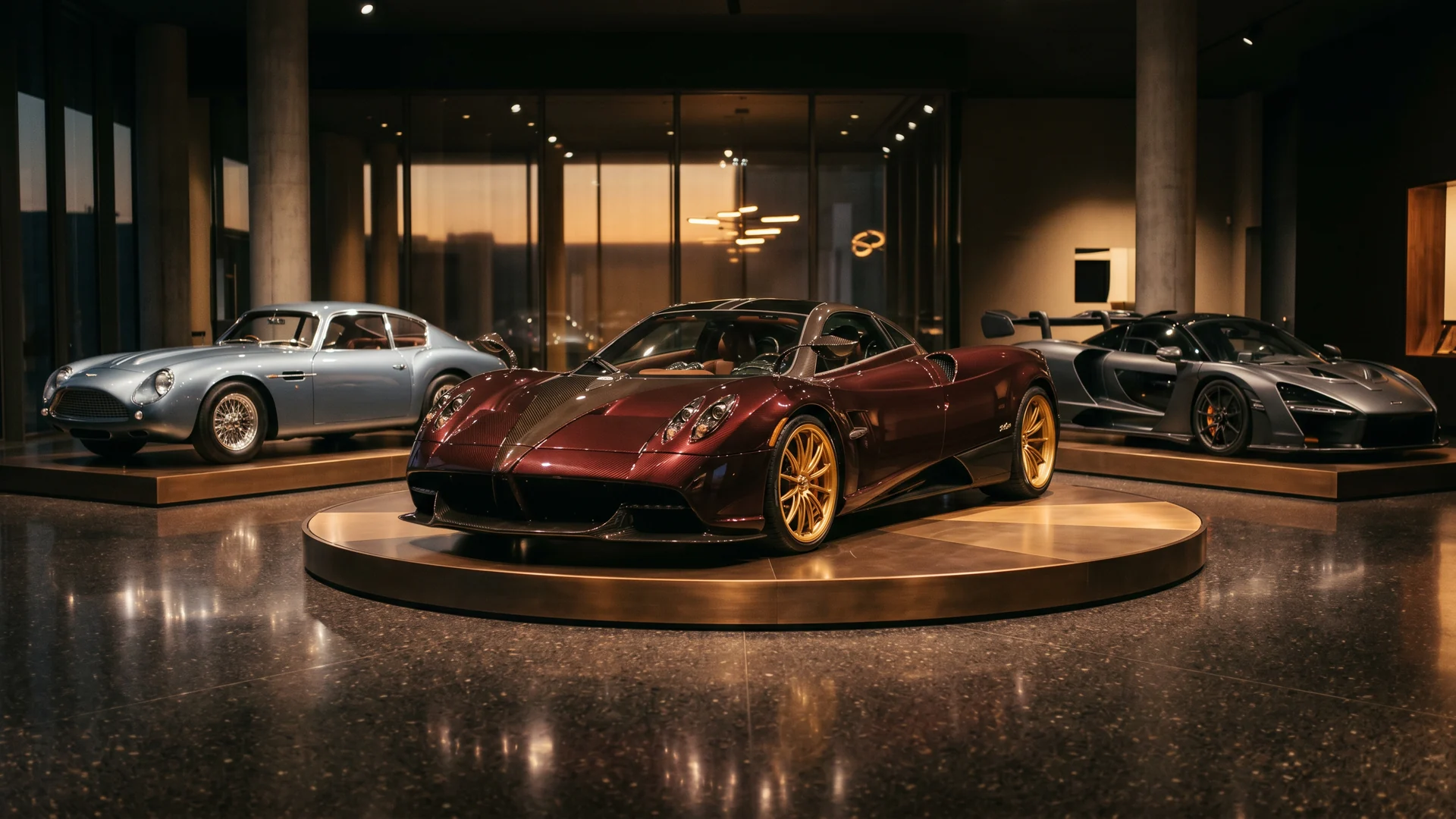
The most expensive cars ever sold range from production hypercars near $4 million to the $28 million Rolls-Royce Boat Tail and the Ferrari 250 GTO at over $70 million privately.
Key Takeaways
- The Bugatti Tourbillon tops production hypercar pricing at EUR 3.8 million ($4.1 million), with an 8.3-liter naturally aspirated V16 plus three electric motors for a combined 1,800 horsepower, limited to 250 units.
- The Rimac Nevera ($2.4 million, 150 units) is the fastest-accelerating production car in history, with four electric motors producing 1,914 horsepower and a 0-60 mph time of 1.74 seconds.
- Scarcity drives price more than performance: the coachbuilt Bugatti Divo ($5.4 million, 40 units) shares its 1,500-horsepower W16 engine with the cheaper Chiron.
- The Rolls-Royce Boat Tail ($28 million) holds the record for the most expensive new car ever commissioned, built as one of three unique cars through Rolls-Royce Coachbuild.
- The Ferrari 250 GTO is the most valuable car on earth, with private sales reported between $50 million and $80 million; a 1963 example sold for roughly $70 million in 2018 and only 36 were built.
- The Pagani Utopia ($2.5 million, 99 coupes) deliberately omits hybrid power, all-wheel drive, and active aero, using a seven-speed true manual gearbox and an 852-horsepower Mercedes-AMG V12.
- The Koenigsegg CC850 ($3.65 million, 50 units) features the Engage Shift System, a nine-speed transmission that operates as an automatic, sequential manual, or six-speed gated manual.
🌐 Also available in: Deutsch
The Price of Ultimate Automotive Ambition
The most expensive supercars and hypercars in the world represent the absolute frontier of automotive engineering, financial commitment, and industrial ambition. These cars exist at an intersection where performance metrics, horsepower, top speed, lap times, become secondary to the statement the car makes about the manufacturer’s capability and the owner’s status. Prices at this level are only loosely correlated with production cost. A Bugatti Tourbillon at €3.8 million does not cost €3.8 million to build. Its price is a function of scarcity, 250 units, brand equity accumulated over 115 years, and the depth of the global billionaire class’s appetite for objects that represent the absolute best of what humanity can engineer.
The threshold for this conversation begins at roughly $2.5 million and extends beyond $28 million for bespoke, coachbuilt commissions. The following survey covers the most expensive road-legal production and limited-series cars currently available or recently delivered, ranked by base price.
Bugatti Tourbillon, €3.8 Million ($4.1 Million)
The Bugatti Tourbillon is the Chiron’s successor and the new benchmark for production hypercar pricing. Named after the rotating escapement mechanism in high-end mechanical watches, a reference to the instrument cluster, which is a titanium-and-sapphire mechanical assembly designed and assembled by Swiss watchmakers that remains stationary while the steering wheel rotates around it, the Tourbillon replaces the Chiron’s quad-turbocharged 8.0-liter W16 with an all-new 8.3-liter naturally aspirated V16 developed in partnership with Cosworth. The V16 produces approximately 1,000 horsepower on its own and revs to 9,000 RPM with a sound that Bugatti describes as “an orchestra of mechanical harmony.” Three electric motors, two on the front axle providing torque vectoring, one on the rear axle integrated into the eight-speed dual-clutch transmission, contribute an additional 800 horsepower for a combined system output of 1,800 horsepower.
Production is strictly limited to 250 units, all of which were spoken for before the car’s public debut at the 2024 Retromobile show in Paris. The base price of €3.8 million is precisely that, a base. The Bugatti Sur Mesure personalization program, which can spend months developing bespoke paint formulas, interior leather colors, and embroidery patterns for a single client, can easily add €500,000 to €1.5 million. Bugatti estimates that the first customer deliveries will occur in 2026 and that the build run will extend through approximately 2033, producing roughly 25 to 30 cars per year. The Tourbillon’s 0-60 mph time is estimated at 2.0 seconds with a top speed electronically limited to 445 km/h (277 mph). The theoretical top speed is higher, the Chiron Super Sport 300+ reached 490 km/h (304 mph) with an older, less powerful powertrain, but Bugatti has stated that the Tourbillon era will prioritize holistic driving experience over top-speed records.
Koenigsegg CC850, $3.65 Million
The Koenigsegg CC850 was created to celebrate Christian von Koenigsegg’s 50th birthday and the 20th anniversary of the CC8S, the company’s first production car delivered in 2002. Production is capped at 50 units, one for each year of the founder’s life. The CC850’s defining technical feature is the Engage Shift System (ESS), a nine-speed multi-clutch transmission that represents one of the most creative gearbox designs in automotive history. The same physical shifter and gear selector can operate in three distinct modes: as a full nine-speed automatic with paddle shifters, as a paddle-operated sequential manual, or, by rotating a selector and deploying a clutch pedal from the footwell, as a traditional six-speed gated manual with an H-pattern shifter. The transmission uses multiple clutches to engage different gear sets depending on the selected mode, effectively containing two gearboxes in one housing.
The CC850 is powered by the Jesko’s 5.0-liter twin-turbocharged flat-plane-crank V8, here producing 1,185 horsepower on 95 RON pump gasoline and 1,385 horsepower on E85 ethanol blend. At $3.65 million, every one of the 50 build slots was allocated within 48 hours of the announcement to existing Koenigsegg clients. The CC850 demonstrates Koenigsegg’s unique position in the hypercar hierarchy: a company of fewer than 500 employees that develops its own engines, transmissions, and software in-house and competes directly with Volkswagen Group’s Bugatti on engineering ambition.
Pagani Utopia, $2.5 Million
The Pagani Utopia is Horacio Pagani’s third-generation hypercar, following the Zonda (1999-2019) and Huayra (2011-2023). Limited to 99 coupes with a Roadster variant to follow, the Utopia is remarkable for what it deliberately does not include: no hybrid system, no dual-clutch transmission, no all-wheel drive, no active aerodynamics. Instead, Pagani developed a seven-speed true manual gearbox with a traditional gated shifter and a third pedal, supplied by Xtrac, the British motorsport transmission specialist, alongside an optional automated single-clutch sequential transmission derived from the same unit. The engine is a 6.0-liter twin-turbocharged Mercedes-AMG V12 producing 852 horsepower and 1,100 Nm (811 lb-ft) of torque, driving the rear wheels exclusively.
Pagani’s clientele values the brand’s artisanal construction philosophy above all else. Every aluminum suspension component is CNC-machined from a solid billet, a process that wastes approximately 80% of the raw material but produces parts of extraordinary precision and beauty. Every carbon-fiber weave pattern is perfectly aligned across adjacent body panels, a detail that takes hours of hand labor per car and is invisible to anyone who is not specifically looking for it. The interior is a leather, aluminum, and carbon-fiber sculpture with exposed linkage mechanisms, milled switchgear, and a level of material quality that makes a Ferrari’s interior feel mass-produced by comparison. At $2.5 million base, options push the final transaction price well past $3 million. Bespoke paint, a multi-stage process involving dozens of hand-applied layers and weeks of curing time, alone costs $150,000 to $300,000.
Rimac Nevera, $2.4 Million
The Rimac Nevera is the electric hypercar that reset the automotive world’s understanding of acceleration. Four permanent-magnet synchronous electric motors, one driving each wheel independently, produce a combined 1,914 horsepower and 2,360 Nm (1,740 lb-ft) of torque. The Nevera holds independently verified production car records for 0-60 mph in 1.74 seconds, 0-100 mph in 3.21 seconds, 0-200 mph in 10.86 seconds, and the standing quarter-mile in 8.25 seconds at 181 mph. The top speed is 412 km/h (256 mph), making it the fastest accelerating production car in history by every conventional metric. The 120 kWh lithium-manganese-nickel battery pack, integrated as a structural element of the carbon-fiber monocoque, provides a WLTP range of 490 km (304 miles) and can charge from 0% to 80% in 19 minutes on a 500 kW DC fast charger.
Production is limited to 150 units at $2.4 million each. Beyond its own branded vehicle, Rimac supplies battery systems, power electronics, and electric drive units to an extraordinary range of manufacturers: Pininfarina (Battista), Aston Martin (Valkyrie hybrid system), Koenigsegg (Regera hybrid system), Porsche (which owns a 45% stake in Rimac through a complex corporate structure), and Hyundai. The Nevera serves as both a commercial product and a technology demonstrator for Rimac’s broader business as a Tier 1 supplier of high-performance electric powertrains. It is, by some measures, the most significant new vehicle of the 2020s, not for its sales volume, but for what it proved about the performance ceiling of electric propulsion.
Aston Martin Valkyrie, $3 Million+
The Aston Martin Valkyrie is the closest any road-registered vehicle has come to being a Formula 1 car with license plates. Developed through a technical partnership with Red Bull Racing Advanced Technologies and designed under the direction of Adrian Newey. Formula 1’s most successful designer, responsible for championship-winning cars at Williams, McLaren, and Red Bull, the Valkyrie features a 6.5-liter naturally aspirated Cosworth V12 producing 1,000 horsepower at 10,500 RPM, supplemented by a Rimac-developed KERS (Kinetic Energy Recovery System) hybrid unit for an additional 160 horsepower. The combined output of 1,160 horsepower propels a car with a dry weight of approximately 1,000 kg (2,205 lbs), yielding a power-to-weight ratio of 1.16 horsepower per kilogram, effectively the 1:1 ratio that hypercar engineers have pursued for decades.
The Valkyrie’s aerodynamic concept is pure Newey: a massive underbody Venturi tunnel that generates the majority of the car’s downforce, over 1,100 kg (2,425 lbs), through ground effect, minimizing the drag penalty of external wings. The engine is bolted directly to the carbon-fiber monocoque as a fully stressed structural member; there is no rear subframe. The driver sits in a feet-up, reclined position similar to an F1 car, with a removable steering wheel (required for entry and exit) and seat padding bonded directly to the monocoque. Production totals 150 coupes, 85 Valkyrie Spider roadsters, and 25 AMR Pro track-only variants, 260 cars total. The base price of approximately $3 million escalates quickly with the AMR Track Pack and bespoke specification. The Valkyrie also competes in the FIA World Endurance Championship Hypercar class and at the 24 Hours of Le Mans, making it the first road-derived hypercar to race at the top tier of international sports car racing since the GT1 era of the late 1990s.
Bugatti Divo, €5 Million ($5.4 Million)
The Bugatti Divo is a Chiron-based coachbuilt special limited to 40 units, all sold before the car’s public debut at The Quail in 2018. Unlike the Chiron, which was engineered to achieve a top speed exceeding 400 km/h (249 mph), the Divo was optimized for lateral acceleration and handling agility. It shares the Chiron’s 8.0-liter quad-turbocharged W16 producing 1,500 horsepower, but it generates 90 kg (198 lbs) more downforce through a redesigned front splitter, a wider rear diffuser, a NACA-duct roof scoop that feeds the engine bay, and a large hydraulically actuated rear wing that adjusts its angle of attack based on speed, braking, and driving mode. The Divo is 35 kg (77 lbs) lighter than the Chiron Sport and laps the Nardò handling circuit in southern Italy 8 seconds faster. At €5 million, the Divo is one of the most expensive coachbuilt Bugattis of the modern era, exceeded only by the Centodieci (€8 million, 10 units) and the one-off La Voiture Noire (€11 million before taxes, approximately $18.7 million including taxes and fees).
Limited-Run, Coachbuilt, and Auction Record-Breakers
Bugatti Centodieci, €8 Million ($8.7 Million)
Limited to 10 units, the Bugatti Centodieci is a coachbuilt tribute to the EB110, the 1990s Bugatti supercar developed under Romano Artioli’s ownership before Volkswagen Group acquired the brand. Based on the Chiron platform and its 1,600-horsepower W16 engine, the Centodieci’s body is entirely unique, featuring the EB110’s signature five-round-intake front fascia and a fixed rear wing. All ten were allocated to existing Bugatti clients before the car was publicly revealed.
Rolls-Royce Boat Tail, $28 Million
While not a supercar by performance metrics, the Rolls-Royce Boat Tail holds the record for the most expensive new car ever commissioned. Built through Rolls-Royce Coachbuild, the company’s revived bespoke division, for an anonymous client widely reported to be connected to the pearl industry, the Boat Tail is one of three commissions (each unique). The rear deck opens in a synchronized butterfly-wing motion to reveal a complete hosting suite: a double refrigerator with bespoke champagne flutes, Christofle cutlery, a parasol, and carbon-fiber stools. The dashboard houses a removable Bovet 1822 dual-face tourbillon timepiece that can be worn as a wristwatch. At $28 million, it exceeds even the most exotic hypercars by an order of magnitude, demonstrating that at the absolute ceiling of automotive pricing, performance recedes and pure bespoke luxury becomes the defining characteristic.
Pagani Zonda HP Barchetta, $17.5 Million
Created as a personal project for Horacio Pagani himself, the Zonda HP Barchetta is a roofless, windshield-less iteration of the long-running Zonda platform. Only three were built, one retained by Pagani for his personal collection, two sold to customers. Powered by a 789-horsepower AMG V12, it represents the final evolution of the Zonda lineage and the most extreme expression of the barchetta form, a car in which the driver and passenger wear helmets as a matter of necessity, not style.
The Auction Pinnacle: Ferrari 250 GTO, $70 Million+ (Private Sale)
No discussion of the most expensive cars in history can exclude the Ferrari 250 GTO, which holds the record for the highest price ever paid for any automobile. While 250 GTOs do not trade at public auction, the last public auction sale was in 2014 for $38.1 million, private transactions are reported in the $50 million to $80 million range. The most widely reported private sale, of a 1963 250 GTO (chassis 4153GT) in 2018, is believed to have closed at approximately $70 million. The 250 GTO’s value is a function of its racing pedigree (it won the FIA World Sportscar Championship in 1962, 1963, and 1964), its extreme rarity (36 built), its aesthetic perfection, and its status as the foundational object of Ferrari collecting. It is the automotive equivalent of a Van Gogh, finite in supply, infinite in demand among those who can afford it.
Key Takeaways
- The current production hypercar ceiling is approximately $4 million: Bugatti Tourbillon ($4.1M), Koenigsegg CC850 ($3.65M), Koenigsegg Jesko Absolut ($3M+), Pagani Utopia ($2.5M+). Limited coachbuilt variants reach $5M to $9M.
- Scarcity drives price far more than performance: The Bugatti Divo ($5.4M, 40 units) shares its engine with the $3M Chiron. The difference is the exclusivity of the coachbuilt body and the 40-unit production cap.
- Electric hypercars have arrived and are setting every acceleration record: The Rimac Nevera ($2.4M, 1,914 hp) is the fastest-accelerating production car in history and supplies powertrain technology to half the hypercar industry.
- Bespoke coachbuilt commissions reach eight figures: The Rolls-Royce Boat Tail ($28M) and Pagani Zonda HP Barchetta ($17.5M) demonstrate that at the absolute pinnacle, performance yields to one-of-a-kind luxury and craftsmanship.
- The Ferrari 250 GTO remains the most valuable car on earth: $50M to $80M for private transactions. 36 built, three consecutive world championships. The automotive world’s apex asset.
The McLaren Speedtail and the Hyper-GT Category
The McLaren Speedtail (106 units, $2.25 million) occupies a unique position as a hyper-GT, a car designed not for lap times or cornering force but for high-speed, long-distance continental travel. Its 4.0-liter twin-turbocharged V8 with a parallel hybrid system produces 1,055 horsepower and propels the Speedtail to a top speed of 403 km/h (250 mph), making it the fastest McLaren ever built. The Speedtail’s body is a masterclass in aerodynamic efficiency, the rear-view cameras (replacing mirrors) retract into the doors, the front wheels are covered by carbon-fiber fairings, and the body tapers to a teardrop tail. The interior features a central driving position with two passenger seats set slightly rearward, recalling the McLaren F1’s layout. At $2.25 million, the Speedtail sits in an interesting market position, more expensive than most supercars but less than the Bugatti Tourbillon or Koenigsegg CC850. It represents McLaren’s vision of the hyper-GT, a category that Bugatti has historically dominated with the Veyron and Chiron, and one that Koenigsegg has entered with the four-seat Gemera.
The Lamborghini Countach LPI 800-4: Retro-Futurism at $2.64 Million
The Lamborghini Countach LPI 800-4 (112 units, $2.64 million) is a fascinating case study in the value of nostalgia in the hypercar market. Mechanically, it is a Lamborghini Sián, the same 6.5-liter V12 with a 48-volt mild-hybrid system using a supercapacitor instead of a battery, producing a combined 803 horsepower. The Countach’s value proposition is entirely aesthetic: it is a modern reinterpretation of Marcello Gandini’s original 1974 Countach design, executed with modern materials and proportions. The 112-unit production run, a reference to the LP 112 internal project code used during the original Countach’s development, sold out before the public reveal. The Countach demonstrates that at the $2 million-plus price point, emotional resonance and design heritage can justify a price premium even when the underlying mechanical package is shared with a slightly less expensive model (the Sián was priced at approximately $2.2 million for 63 coupes). Buyers at this level are not comparing horsepower-per-dollar ratios. They are buying objects that tell a story.
Frequently Asked Questions (FAQ)
What is the most expensive car ever sold?
The Ferrari 250 GTO holds the record for the highest price ever paid for any automobile, with private transactions reported in the $50 million to $80 million range. A 1963 250 GTO, chassis 4153GT, is believed to have sold for approximately $70 million in 2018. Only 36 were ever built.
How much does the Bugatti Tourbillon cost?
The Bugatti Tourbillon has a base price of EUR 3.8 million, about $4.1 million, making it the new benchmark for production hypercar pricing. The Sur Mesure personalization program can add EUR 500,000 to EUR 1.5 million. Production is limited to 250 units, all spoken for before its 2024 debut.
What is the fastest-accelerating production car in the world?
The Rimac Nevera is the fastest-accelerating production car in history. Its four electric motors produce 1,914 horsepower, delivering 0-60 mph in 1.74 seconds, 0-100 mph in 3.21 seconds, and a standing quarter-mile in 8.25 seconds. It is priced at $2.4 million and limited to 150 units.
Why is the Rolls-Royce Boat Tail so expensive at $28 million?
At $28 million, the Rolls-Royce Boat Tail is the most expensive new car ever commissioned. Built through Rolls-Royce Coachbuild as one of three unique cars, it features a butterfly-wing rear deck hosting suite with a double refrigerator, Christofle cutlery, and a removable Bovet 1822 tourbillon timepiece. It proves bespoke luxury can eclipse performance.
What makes the Pagani Utopia different from other hypercars?
The Pagani Utopia is defined by what it leaves out: no hybrid system, no dual-clutch transmission, no all-wheel drive, and no active aerodynamics. It offers a seven-speed true manual gearbox from Xtrac and a 6.0-liter twin-turbocharged Mercedes-AMG V12 producing 852 horsepower. The base price is $2.5 million, limited to 99 coupes.
How is the Aston Martin Valkyrie like a Formula 1 car?
The Aston Martin Valkyrie is the closest road-registered vehicle to a Formula 1 car with license plates. Designed by F1 great Adrian Newey with Red Bull Racing, it pairs a 6.5-liter Cosworth V12 with a Rimac KERS hybrid for 1,160 horsepower and roughly a 1:1 power-to-weight ratio. It also races at the 24 Hours of Le Mans.
What is the cheapest car on the most expensive supercars list?
The McLaren Speedtail is the lowest-priced car covered, at $2.25 million for 106 units. This hyper-GT uses a 4.0-liter twin-turbocharged V8 with a parallel hybrid system producing 1,055 horsepower and reaches 403 km/h (250 mph), making it the fastest McLaren ever built. Its three-seat layout recalls the McLaren F1.
Why is the Lamborghini Countach LPI 800-4 so valuable?
The Lamborghini Countach LPI 800-4 sells for $2.64 million across 112 units, with value driven entirely by nostalgia and design heritage. Mechanically it is a Lamborghini Sian, sharing the 6.5-liter V12 and 48-volt mild-hybrid system producing 803 horsepower, but it reinterprets Marcello Gandini's original 1974 Countach. The 112-unit run references the LP 112 project code.
More from Motorsport
Future of Supercars – Electric Revolution and Beyond
The future of supercars: Ferrari’s 2025 electric flagship, Porsche’s synthetic eFuel, Rimac’s record-breaking EVs and why the V12 su…
Supercar Tuning Performance Guide – Extracting Maximum Power
Supercar tuning guide: how a Ferrari 488, Porsche 911 Turbo S or McLaren 720S gains power, with ECU, exhaust and turbo costs plus warranty and resale …
Supercar Insurance Complete Guide – Protecting Your Investment
Supercar insurance guide: why standard policies fail, how Agreed Value works, top carriers Hagerty, Chubb, Grundy, PURE, plus track, storage and broke…