Supercar Track Day Complete Guide: From Novice to Expert
Supercar track day guide: track brake pads, fluid, tire pressures, insurance, warm-up discipline and stability control tips to drive safely from novice to expert.…
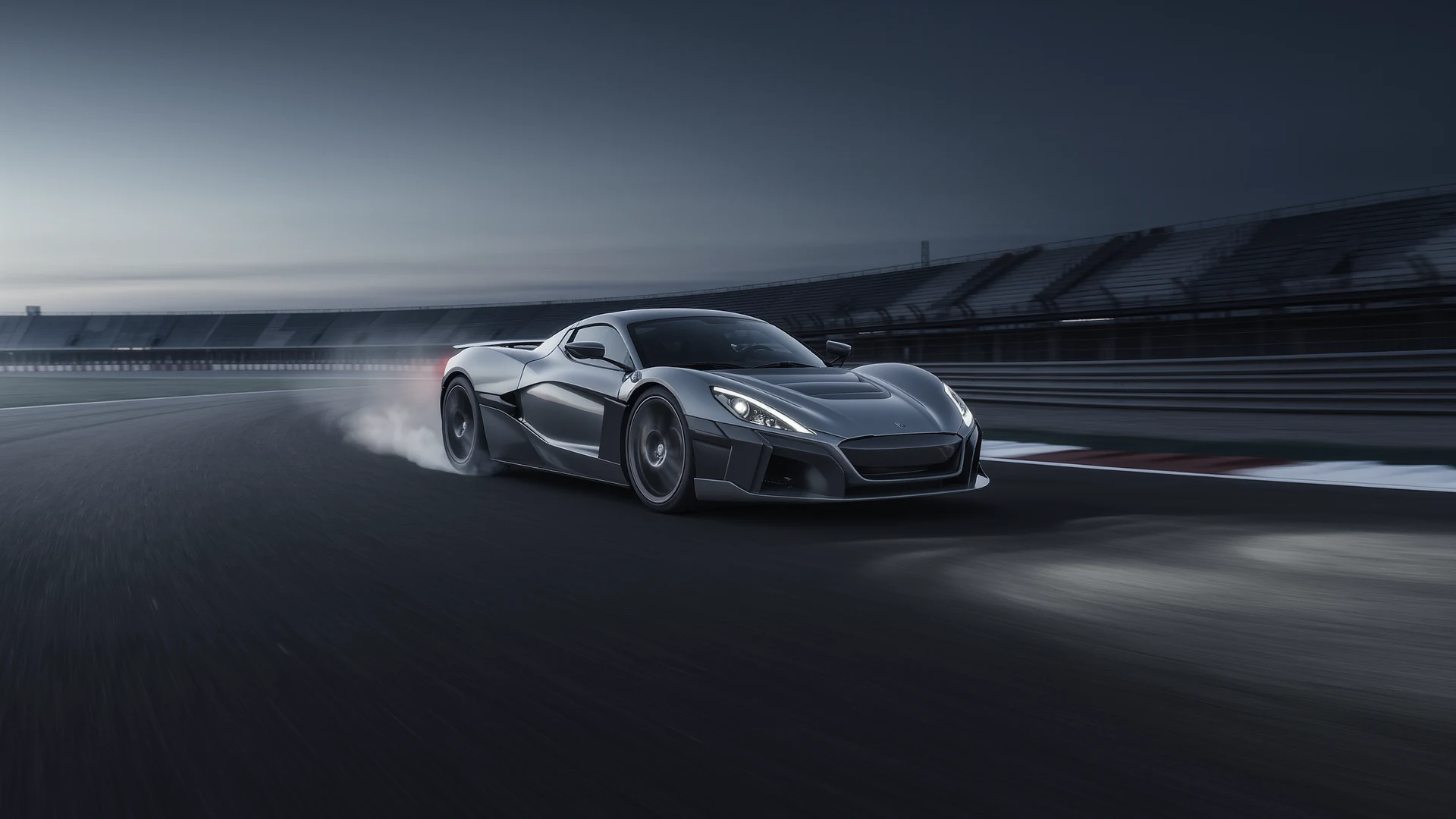
A supercar track day demands dedicated track brake pads, fresh high-boiling-point fluid, managed tire pressures, track insurance and a disciplined warm-up, cool-down and stability-control routine.
Key Takeaways
- Public roads use only 15% to 20% of a supercar's performance envelope, while a track lets you exploit its full potential corner after corner; a Ferrari 296 GTB hits 60 mph in 2.4 seconds.
- Street brake pads fade above roughly 400 degrees Celsius, but track braking routinely exceeds 600 degrees Celsius; Pagid RSL29 is the dual-purpose benchmark, with Pagid RSC1 or Ferodo DS3.12 for track-only cars.
- Flush brake fluid within two weeks of every event using Castrol SRF (wet boiling point 270 degrees Celsius, $70 per liter) or Motul RBF 660 ($40 per liter) to prevent a pedal sinking to the floor.
- Target 34 to 38 psi hot for street tires like Michelin Pilot Sport 4S, starting cold around 26 to 30 psi; never trust TPMS, and use a Longacre gauge ($60) plus an air compressor.
- Track insurance from Hagerty, OpenTrack or OnTrack costs 1% to 2% of agreed value per event, with a $300,000 car running roughly $3,000 to $6,000 in premiums and $15,000 to $30,000 deductibles.
- Drive two warm-up laps and one cool-down lap each session; aggressive braking on cold carbon-ceramic rotors causes thermal shock cracks costing $4,000 to $10,000 per rotor, and never apply the parking brake to hot brakes.
- Keep stability control in Sport or Race mode until you have at least five full track days in that car with an instructor; mid-engine supercars have a low polar moment that triggers fast snap oversteer.
🌐 Also available in: Deutsch
Why Take Your Supercar to the Track
The argument for tracking your supercar is straightforward and irrefutable: public roads allow access to perhaps 15% to 20% of your car’s performance envelope before you reach velocities that are both criminal and genuinely dangerous to yourself and others. A Ferrari 296 GTB will reach 60 mph in 2.4 seconds and cover a quarter-mile in 9.7 seconds at 149 mph. On a public road, you experience that level of acceleration for roughly two seconds before you must lift off the throttle. On a racetrack, you experience it corner after corner, lap after lap, developing the physical skill and mental calibration to use the car’s full potential. A track day transforms a supercar from an expensive curiosity into a legitimate performance instrument. The track is where these cars make sense; it is the environment for which they were engineered.
The secondary argument is driver development. A modern supercar’s electronic safety systems, stability control, traction control, ABS, torque vectoring, are extraordinarily sophisticated and capable. But they are calibrated to rescue a driver who makes a mistake, not to develop a driver into someone who does not make mistakes. Learning to drive at the limit with the electronic safety nets progressively dialed back, under the supervision of a qualified instructor, builds car-control skills that directly translate to safer, more competent road driving. You develop an intuitive, physical understanding of weight transfer under braking, the relationship between steering angle and throttle application, and the sensation of a car communicating its grip level through the steering wheel and seat. These are skills that cannot be learned on a canyon road, because exploring the car’s limit on a canyon road means exploring the consequences of exceeding that limit with a guardrail, a tree, or oncoming traffic as your teacher.
Preparing Your Car: The Non-Negotiable Checklist
Brakes: The Track Day Achilles Heel
Stock brake pads on most supercars are engineered for cold bite, silent operation, and minimal dust production, precisely the opposite of what works on a racetrack. Street pads use friction compounds that begin to fade, lose their coefficient of friction, at pad temperatures above approximately 400 degrees Celsius (750 degrees Fahrenheit). On a track day, pad temperatures routinely exceed 600 degrees Celsius (1,100 degrees Fahrenheit) and can spike above 700 degrees Celsius (1,300 degrees Fahrenheit) under sustained heavy braking into high-speed corners. The result of pad fade is terrifying: the brake pedal remains firm because the hydraulic fluid has not boiled, but the car simply does not slow down because the friction material has lost its grip on the rotor. The solution is a dedicated track-capable pad compound.
Pagid RSL29 (yellow) is the industry benchmark for dual-purpose street and track use across most European supercars. Its friction coefficient remains stable past 650 degrees Celsius, and it produces moderate dust and noise that are acceptable for street driving. For dedicated track-only cars, Pagid RSC1 or Ferodo DS3.12 provide higher thermal capacity at the cost of increased dust, noise, and rotor wear. Pad swap procedure varies by car. On Porsche GT products, pad changes can be performed with the calipers on the car using a drift pin to push out the retaining pins, a 15-minute job per axle with practice and the correct tools. Ferraris and Lamborghinis generally require caliper removal for pad changes, which is a 1 to 2 hour job at a shop. Budget $400 to $900 for a front pad set and either learn to do the swap yourself or budget $300 to $600 in labor at a shop before each event.
Brake fluid is equally critical, and arguably more dangerous if neglected. Factory-fill DOT 4 brake fluid has a dry boiling point around 230 degrees Celsius (446 degrees Fahrenheit) and a wet boiling point, after absorbing moisture from the atmosphere, around 155 degrees Celsius (311 degrees Fahrenheit). Fluid absorbs moisture through the brake system’s vented reservoir cap and through microscopic porosity in the rubber brake lines. After 12 months of service, the fluid’s wet boiling point is the relevant number, and 155 degrees Celsius is dangerously low for track use. Boiling brake fluid creates gas bubbles in the hydraulic system, which are compressible. The result is a brake pedal that sinks to the floor under pressure, a total loss of braking. This is not theoretical; it is the most common cause of track day accidents among novice drivers. Flush the system with Castrol SRF, the gold standard at $70 per liter, wet boiling point 270 degrees Celsius, within two weeks of every track event. SRF’s exceptionally high wet boiling point is the reason it commands its price premium. Motul RBF 660 at $40 per liter is a good alternative for drivers who change fluid before every event.
Tires and Pressures: The Foundation of Grip
Track driving generates enormous heat in tires. A high-performance street tire that is set to 32 psi cold may reach 42 to 48 psi hot after three aggressive laps, at which point the tire’s contact patch distorts, grip falls off significantly, and the center of the tread wears at an accelerated rate. The universally accepted target is 34 to 38 psi hot for Michelin Pilot Sport 4S, Pirelli P Zero, and similar ultra-high-performance street tires. Track-focused tires like the Michelin Pilot Sport Cup 2 and Pirelli Trofeo R prefer slightly lower pressures of 32 to 36 psi hot. This means starting the session with cold pressures around 26 to 30 psi, depending on ambient temperature, track layout, and your pace. The specific target cold pressure is determined empirically: you check hot pressures immediately after a session, compare them to the target, and adjust your cold starting pressure accordingly for the next session.
Essential equipment: a quality tire pressure gauge (Longacre analog gauge, $60, is the industry standard; digital models from Intercomp are also excellent) and a portable air compressor capable of inflating high-performance tires to 45+ psi. Do not rely on the car’s tire pressure monitoring system for precision. TPMS sensors are calibrated for street use and are typically accurate to within 2 to 3 psi, not the 0.5 psi precision you need for track work. Inspect tires between sessions for unusual wear patterns. Shoulder wear on the outer edge indicates insufficient negative camber, typical on street-aligned supercars that do not have adjustable suspension. Grains, small balls of rubber accumulating on the tread surface, indicate the tire is operating above its optimal temperature range. Either back off for a cool-down lap or reduce starting pressures slightly.
Fluids and Mechanical Preparation
Check all fluid levels before you arrive at the track. Engine oil must be at the maximum mark on the dipstick, not the midpoint. High-G cornering can cause momentary oil starvation in wet-sump engines if the oil level is low, with catastrophic consequences ranging from spun rod bearings to a ventilated engine block. This is particularly critical for mid-engine cars with high lateral grip. Ferraris, Lamborghinis, and McLarens routinely pull 1.2 to 1.5 G in corners, which can un-port the oil pickup in the sump if the level is insufficient. Use the exact manufacturer-specified oil type and viscosity; do not substitute. Coolant should be at the maximum mark with the correct factory-spec fluid. Generic coolant mixed with the factory fill can cause chemical reactions that produce sludge, clogging the cooling system. Transmission fluid level cannot be checked on most dual-clutch transmissions without diagnostic equipment; ensure the car is within its service interval. Torque every wheel lug bolt or center-lock nut to the factory specification using a calibrated torque wrench. Center-lock wheels on Porsches require 600 Nm (443 lb-ft) of torque, a specialized tool that costs approximately $2,000 to $4,000. Have a Porsche dealer or certified specialist verify center-lock torque before the event. Do not attempt this yourself without the correct equipment and training.
What to Pack: The Complete Track Day Kit
A properly prepared track day kit will make the difference between a smooth, enjoyable day and a frustrating, stressful one. Mandatory items: a Snell SA2020 or later-rated helmet (most HPDE organizations require SA2015 minimum; SA2020 is the current standard as of 2026; motorcycle M-rated helmets are generally not accepted), Nomex driving gloves for grip and sweat management, closed-toe shoes with thin, flat soles for precise pedal feel, a torque wrench with the correct socket for your lug bolts or nuts, a quality tire pressure gauge, a portable air compressor, a basic metric tool kit, one quart of the correct engine oil for top-ups, spare brake pads if your current pads are below 50% thickness, glass cleaner and microfiber towels for windshield and mirrors (bug splatter and tire rubber accumulate quickly), a folding chair, a cooler with water and electrolyte drinks, and high-SPF sunscreen. Track days are physically demanding and dehydrating, drink water continuously, before you feel thirsty. A GoPro or similar action camera with a robust suction-cup mount is invaluable for reviewing your driving line, braking points, and hand positioning between sessions.
Track Day Insurance: The Financial Safety Net
Your standard auto insurance policy almost certainly excludes any loss occurring on a “racing surface,” “track,” or “facility designed for competitive driving.” Many policies are worded broadly enough to exclude any use on a racing circuit, even during non-competitive HPDE events where passing is restricted and timing is prohibited. Hagerty Racetrack Insurance, OpenTrack, and OnTrack Insurance are the dedicated providers. Policies are purchased per event, with premiums calculated as 1% to 2% of the vehicle’s agreed value. A $300,000 supercar insured for a two-day event costs approximately $3,000 to $6,000 in premiums. Deductibles are typically 5% to 10% of the agreed value, $15,000 to $30,000 on a $300,000 car. This is expensive insurance, but a single off-track excursion that damages suspension, bodywork, and, in a worst-case scenario, the carbon-fiber monocoque chassis, can easily generate a six-figure repair bill. Track insurance exists for catastrophic events, not for minor damage.
Driving Technique for Supercars on Track
Warm-Up and Cool-Down Discipline
The first two laps of every session are warm-up laps. This is not a suggestion. Tires, engine oil, transmission fluid, and differential fluid all need heat to reach their designed operating viscosity and performance characteristics. Drive at 50% to 70% pace for two full laps, building speed progressively. Brake gently and early on the out-lap to introduce heat into the rotors and pads gradually. Aggressive braking on cold carbon-ceramic rotors causes thermal shock, a rapid temperature gradient between the friction surface and the rotor core, that can crack the rotor. A cracked carbon-ceramic rotor is not repairable and must be replaced at a cost of $4,000 to $10,000 per rotor. The last lap of every session is a dedicated cool-down lap: no hard braking, no full throttle, keep the car moving at moderate speed to circulate cool air through the brakes, engine bay, and radiators. Park the car in the paddock with the transmission in gear or in Park. Never engage the parking brake on hot brakes, the parking brake clamps the hot disc in one position, creating an uneven cooling pattern that can warp the rotor. If the paddock is sloped, use wheel chocks.
Managing Weight Transfer in a Mid-Engine Car
Mid-engine supercars, Ferraris, Lamborghinis, McLarens, have a low polar moment of inertia. The engine and transmission mass is concentrated near the car’s center of gravity, meaning the car rotates (yaws) quickly and eagerly. This low polar moment is a tremendous advantage for agility, these cars change direction with an immediacy that front-engine cars cannot match, but it is also a risk factor. If weight transfer is mismanaged, the rear of the car can step out with little warning, and the low polar moment means that once rotation begins, it happens quickly and can be difficult to catch. The golden rule for mid-engine driving: complete your braking in a straight line before initiating turn-in. Trail-braking, carrying brake pressure into the corner to keep weight on the front axle and rotate the car, is an advanced technique that should only be attempted after you have mastered the fundamentals and are working with an instructor who knows the specific car. In a mid-engine platform, too much trail-brake pressure combined with steering input can unload the rear tires and trigger snap oversteer that is nearly impossible to recover at speed.
Stability Control: Your Ally, Not Your Enemy
Modern supercars offer graduated stability-control settings that range from full intervention to completely disabled. Ferrari’s Manettino dial offers Wet (maximum intervention, for rain), Sport (moderate slip allowed, stability net retained), Race (high slip thresholds, reduced intervention), CT Off (traction control disabled, stability control still active), and ESC Off (no electronic intervention whatsoever). Porsche’s system offers Normal, Sport, and Off, with intermediate levels available in Sport Chrono-equipped cars. Start your first track day, and your first session in any unfamiliar car, in Sport or Race mode. These modes allow the car to move around beneath you, developing your sensitivity to weight transfer and slip, while retaining a safety net that intervenes if the car exceeds a programmed slip-angle threshold. Do not disable stability control entirely until you have at least five full track days of experience in that specific car and an instructor in the passenger seat who is familiar with the platform. The margin between a controlled four-wheel drift and an impact is measured in milliseconds, and stability control systems react faster than any human nervous system ever will.
Best Tracks and HPDE Organizations
In North America, the premier road courses that regularly host HPDE events include Circuit of the Americas (Austin, Texas, 3.4 miles, 20 turns, Formula 1 grade), WeatherTech Raceway Laguna Seca (Monterey, California, 2.2 miles, 11 turns including the famous Corkscrew), Road Atlanta (Braselton, Georgia, 2.5 miles, 12 turns, exceptionally fast esses), VIRginia International Raceway (Alton, Virginia, 3.3 miles, 17 turns, arguably the most beautiful circuit in the country), Watkins Glen International (Watkins Glen, New York, 3.4 miles, 11 turns, NASCAR and IMSA history), and Sebring International Raceway (Sebring, Florida, 3.7 miles, 17 turns, famously bumpy concrete surface that tests suspension and driver endurance). In Europe, the Nürburgring Nordschleife (Germany, 12.9 miles, 73 turns), Spa-Francorchamps (Belgium, 4.3 miles, Eau Rouge and Raidillon), Silverstone (UK), Monza (Italy), and Circuit de Barcelona-Catalunya (Spain) lead the list.
Reputable HPDE organizations include PCA (Porsche Club of America, open to all marques at most events), BMW CCA (BMW Car Club of America, open to all marques), Chin Track Days, Hooked on Driving, NASA (National Auto Sport Association, HPDE program), and SCCA Track Night in America. These organizations maintain a strong safety culture: mandatory instructors for novice and intermediate drivers, strictly enforced passing rules (point-by passing only, typically on designated straights), and a disciplined schedule that maximizes track time while minimizing the risk of on-track incidents. Avoid loosely organized track events where passing rules are ambiguous and driver qualification is not strictly verified. A track day is not a race; it is an educational environment, and organizations that forget this distinction are the ones where cars end up in tire walls.
Key Takeaways
- Track pads and fluid are mandatory, not optional: Street pads fade past 400°C. Track pads handle 600°C+. Flush with Castrol SRF within two weeks of every event. Budget $700 to $1,500 for pads, fluid, and labor per event.
- Tire pressures are critical and must be managed actively: Start cold at 26-30 psi to land at 32-38 psi hot. Bring a quality gauge, a compressor, and check pressures immediately after every session.
- Track insurance protects against financial catastrophe: 1-2% of agreed value per event. A single off-track incident can cost six figures. Hagerty, OpenTrack, OnTrack are the major providers.
- Warm up for two full laps, cool down for one: Thermal shock cracks carbon-ceramic rotors. Never apply the parking brake to hot brakes. Let the car cool with airflow before parking.
- Start with stability control engaged: Learn weight transfer and slip-angle management in Sport or Race mode before even considering disabling ESC. Mid-engine cars punish mistakes harshly and quickly.
- Bring a complete, organized kit: Helmet, tools, oil, spare pads, air compressor, water, sunscreen, folding chair. Track days are physically demanding, dehydrating, and sun-exposed. Prepare accordingly.
Frequently Asked Questions (FAQ)
Why should I take my supercar to a track instead of driving fast on public roads?
Public roads only let you access about 15% to 20% of a supercar's performance before reaching dangerous, illegal speeds. A track lets you use the car's full potential corner after corner while developing car-control skills like weight transfer and grip sensing under a qualified instructor, which translate to safer road driving.
What brake pads and brake fluid do I need for a supercar track day?
You need dedicated track pads because street pads fade above roughly 400 degrees Celsius while track braking exceeds 600 degrees. Pagid RSL29 is the dual-purpose benchmark, with Pagid RSC1 or Ferodo DS3.12 for track-only cars. Flush brake fluid within two weeks of every event using Castrol SRF or Motul RBF 660.
What tire pressures should I run on a supercar track day?
Aim for 34 to 38 psi hot on ultra-high-performance street tires like Michelin Pilot Sport 4S or Pirelli P Zero, and 32 to 36 psi hot for track tires like the Pilot Sport Cup 2. Start cold around 26 to 30 psi, then check hot pressures after each session and adjust empirically.
How much does supercar track day insurance cost?
Track insurance is purchased per event at 1% to 2% of the vehicle's agreed value. A $300,000 supercar insured for a two-day event costs roughly $3,000 to $6,000 in premiums, with deductibles of 5% to 10%, or $15,000 to $30,000. Hagerty, OpenTrack and OnTrack are the dedicated providers.
How do warm-up and cool-down laps work on a track day?
Drive the first two laps of every session at 50% to 70% pace to bring tires, oil and fluids to operating temperature, braking gently to avoid thermal shock on cold carbon-ceramic rotors. The last lap is a dedicated cool-down with no hard braking, keeping airflow through the brakes before parking without the parking brake.
What stability control setting should a beginner use in a Ferrari or Porsche on track?
Start in Sport or Race mode, which lets the car move beneath you while retaining a safety net. Ferrari's Manettino offers Wet, Sport, Race, CT Off and ESC Off, while Porsche offers Normal, Sport and Off. Do not fully disable stability control until you have at least five full track days in that car with an instructor.
What are the best tracks and HPDE organizations for supercar track days?
Top North American HPDE road courses include Circuit of the Americas, WeatherTech Raceway Laguna Seca, Road Atlanta, VIRginia International Raceway, Watkins Glen and Sebring, with European leaders like the Nürburgring Nordschleife and Spa-Francorchamps. Reputable organizations include PCA, BMW CCA, Chin Track Days, Hooked on Driving, NASA and SCCA Track Night in America.
What should I pack in a supercar track day kit?
Mandatory items include a Snell SA2020 helmet, Nomex gloves, thin-soled closed-toe shoes, a torque wrench, a tire pressure gauge, a portable air compressor, a metric tool kit, a quart of correct oil, and spare pads if yours are below 50%. Add glass cleaner, microfiber towels, a folding chair, water with electrolytes and high-SPF sunscreen.
More from Motorsport

Future of Supercars – Electric Revolution and Beyond
The future of supercars: Ferrari’s 2025 electric flagship, Porsche’s synthetic eFuel, Rimac’s record-breaking EVs and why the V12 su…
Supercar Tuning Performance Guide – Extracting Maximum Power
Supercar tuning guide: how a Ferrari 488, Porsche 911 Turbo S or McLaren 720S gains power, with ECU, exhaust and turbo costs plus warranty and resale …

Supercar Insurance Complete Guide – Protecting Your Investment
Supercar insurance guide: why standard policies fail, how Agreed Value works, top carriers Hagerty, Chubb, Grundy, PURE, plus track, storage and broke…