Future of Supercars: Electric Revolution and Beyond
The future of supercars: Ferrari’s 2025 electric flagship, Porsche’s synthetic eFuel, Rimac’s record-breaking EVs and why the V12 survives past the 2035 ban.…
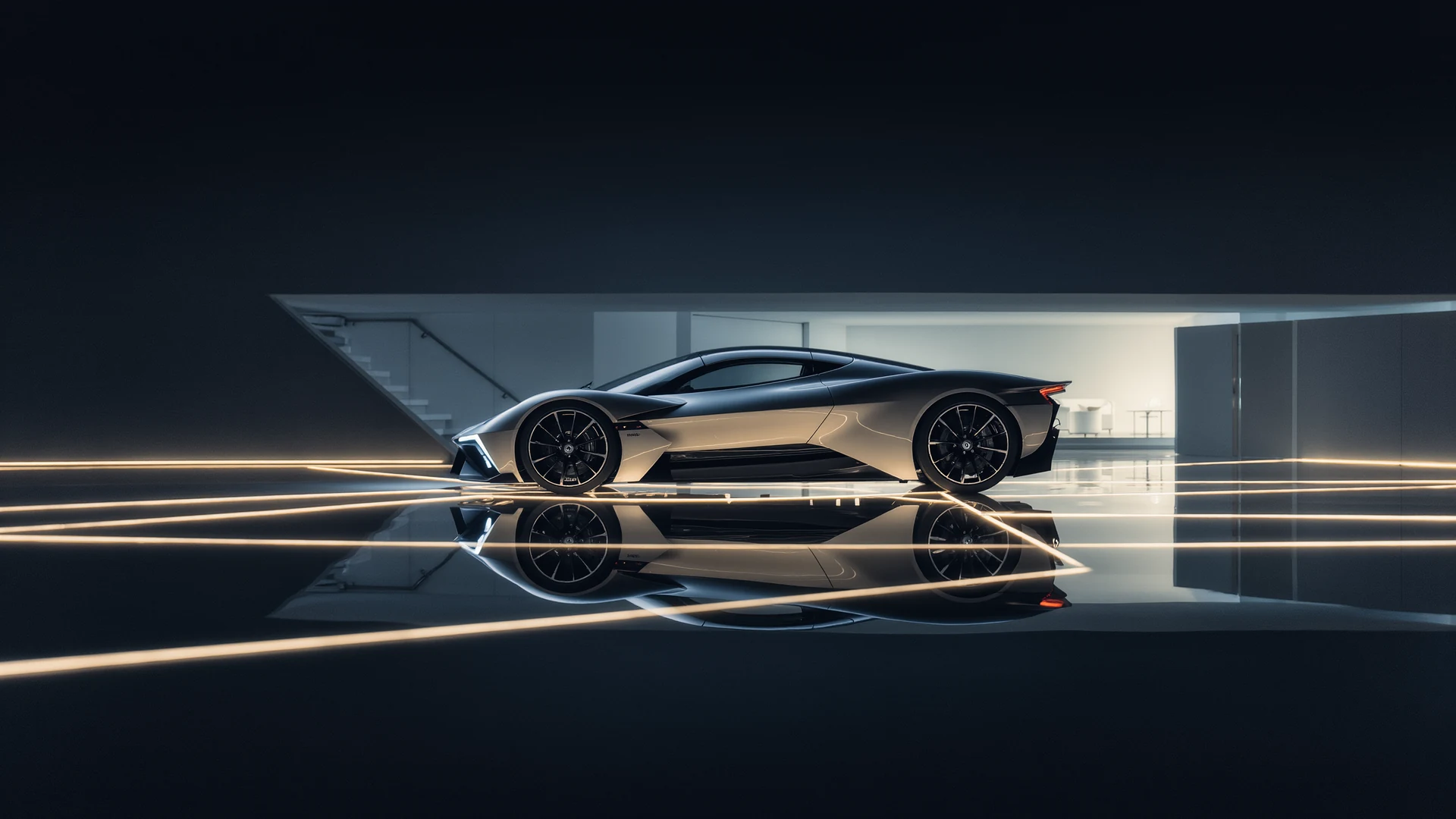
The future of supercars splits into two thriving tracks: electric flagships like Ferrari's 2025 EV and combustion legends preserved by carbon-neutral synthetic fuel past 2035.
Key Takeaways
- Ferrari's first fully electric production car debuts in late 2025 with 2026 deliveries, built at its roughly 200 million euro E-building in Maranello and priced above 500,000 dollars.
- Ferrari patents reveal a three-motor electric drivetrain, a 100-120 kWh battery targeting over 400 km WLTP range, and a sound-augmentation system co-developed with Formula 1 engineers to mimic a naturally aspirated V12.
- Porsche's Haru Oni eFuel plant in Punta Arenas, Chile produces about 130,000 liters of synthetic gasoline yearly at 10-15 dollars per liter, aiming to fall to 2-3 dollars per liter within a decade.
- The EU's 2035 combustion ban includes an eFuels carve-out negotiated by Germany in 2023, letting carbon-neutral-fuel vehicles stay on sale and allowing Porsche to keep building the combustion 911.
- Electric newcomers have dissolved the performance hierarchy: the Croatian Rimac Nevera holds acceleration records, while the Pininfarina Battista (1,900 hp, 2.5 million dollars) and Lotus Evija (2,000 hp, 2.1 million dollars) use Rimac powertrains.
- Gordon Murray Automotive sells analog purism at a premium: the 3.1 million dollar T.50 packs a Cosworth 3.99-liter V12 revving to 11,500 RPM, weighs just 986 kg, and sold out all 100 units within 48 hours.
- By 2035 volume supercars go plug-in hybrid or electric, while V12 engines and manual gearboxes survive only in seven-figure, synthetic-fuel-burning limited editions from brands like GMA and Pagani.
🌐 Also available in: Deutsch
The Electrification Inflection Point
Market Forces Accelerating the Shift
The supercar industry confronts the most significant technological and existential transition in its 60-year history. The internal combustion engine, the component that has defined the supercar’s sensory and emotional identity from the Lamborghini Miura to the Ferrari LaFerrari, faces regulatory extinction across its primary markets. The European Union’s 2035 ban on the sale of new internal-combustion vehicles, the United Kingdom’s equivalent 2035 deadline, and increasingly aggressive zero-emission vehicle mandates in California and the 17 CARB-aligned US states that follow California’s lead have compressed the timeline for manufacturers to electrify their product portfolios. The supercar industry is uniquely positioned to navigate this transition: it has the most to lose, the emotional identity of its products is inseparable from combustion sound, vibration, and mechanical theater, and it has the financial resources and engineering talent to develop solutions that the mass market cannot afford.
Regulatory Timelines by Region
Consumer Sentiment Among Collectors
The transition is unfolding in distinct phases. The current phase, approximately 2023 through 2030, is defined by hybridization as a performance enhancer. The Ferrari SF90 Stradale, Lamborghini Revuelto, McLaren Artura, and Porsche 911 GTS T-Hybrid all use electric motors to amplify acceleration, fill torque gaps, and enable torque vectoring, while retaining a combustion engine as the primary power source and the car’s sonic identity. The next phase, approximately 2028 through 2035, will introduce the first fully electric supercars from Ferrari, Lamborghini, Porsche, and McLaren that are not low-volume engineering demonstrators (like the Rimac Nevera or Pininfarina Battista) but series-production models intended to sustain these companies’ model lineups through the post-combustion regulatory era.
Ferrari’s Electric Strategy: Silence as a Feature
The Maranello E-Building Investment
Ferrari has confirmed that its first fully electric production model will debut in late 2025 and begin customer deliveries in 2026. The car, whose name has not been announced, will be manufactured at Ferrari’s new E-building in Maranello, a dedicated production facility for electric motors, inverters, battery modules, and final assembly of electric vehicles, constructed at a cost of approximately €200 million ($216 million). Ferrari has filed patents revealing a three-motor electric drive architecture, likely two motors on the rear axle and one on the front, providing all-wheel drive and torque vectoring. The battery is expected to be in the 100 to 120 kWh range, targeting a driving range above 400 km (250 miles) on the WLTP cycle.
Sound Design: Engineering Acoustic Signatures
The most controversial and technically interesting aspect is Ferrari’s sound augmentation system. Patents describe acoustic resonators and speakers integrated into the vehicle’s structure that generate an artificial engine sound mapped to motor RPM, throttle position, and vehicle speed. The system is reportedly co-developed with acoustic engineers from Ferrari’s Formula 1 program and is designed to reproduce the frequency spectrum and harmonic structure of a naturally aspirated V12, the third, fifth, and seventh harmonics of a 60-degree V12 firing at 6,500 RPM form a chord progression that is mathematically identifiable as “the Ferrari sound.” Whether Ferrari’s traditional buyer base, which values authenticity above almost every other attribute, will accept an artificial sound as a convincing substitute is the single largest question mark hanging over the electric Ferrari project.
Positioning Electric Beside V12
The electric Ferrari is expected to be priced above $500,000, positioning it above the Roma and 296 GTB and competing directly with the SF90 Stradale and 812 Superfast replacements. The business model is telling: Ferrari’s first EV is not a cautious, low-priced entry-level experiment. It is a flagship, priced at the top of the range, targeting Ferrari’s wealthiest and most brand-loyal customers, the same people who own multiple combustion Ferraris and who will add a silent Ferrari to the collection as a technological statement piece rather than as a replacement for their V12s.
Porsche’s Parallel Path: Combustion Survival Through Synthetic Fuel
The Haru Oni eFuels Plant
Porsche is pursuing a distinctive dual-track strategy that may provide the combustion supercar with a regulatory path to long-term survival. The company has invested over $100 million in the development and production of eFuel, synthetic gasoline manufactured by capturing carbon dioxide from the atmosphere, producing hydrogen through water electrolysis using renewable electricity, and synthesizing the two into liquid hydrocarbon fuel. The pilot facility, the Haru Oni plant in Punta Arenas, southern Chile, was chosen because the region’s consistent high winds, among the strongest and most reliable on earth, can power the electrolysis process with genuine 100% renewable energy. The plant currently produces approximately 130,000 liters (34,000 gallons) per year, which Porsche uses for its Mobil 1 Supercup racing series, its Experience Centers, and development activities.
911 as the Combustion Holdout
The production volume is minuscule in absolute terms: it represents the annual fuel consumption of perhaps 50 to 100 Porsche 911s driven 10,000 miles each. The production cost is high: approximately $10 to $15 per liter ($38 to $57 per gallon). But Porsche projects that industrial scaling, larger plants, more efficient electrolysis, and manufacturing learning curves, can reduce the cost to $2 to $3 per liter ($7.60 to $11.40 per gallon) within a decade. At that price point, synthetic fuel becomes viable as a premium product for the existing global fleet of collectible and enthusiast vehicles. The global fleet of approximately 1.4 billion combustion vehicles will not be replaced by electric vehicles for decades, and synthetic fuel offers a way to decarbonize that fleet without requiring every car to be scrapped and replaced.
Taycan and Macan EV: The Electric Revenue Engine
Regulatory developments support this pathway. The European Union’s 2035 combustion ban contains a specific carve-out for vehicles that can demonstrate they run exclusively on carbon-neutral fuels. The so-called “eFuels amendment,” negotiated by Germany and several other member states in 2023, mandates that the European Commission develop a methodology for certifying that a vehicle operates only on carbon-neutral fuel, enabling continued registration and sale of combustion-engine vehicles past the 2035 deadline. Porsche has publicly committed to continuing 911 production with a combustion engine for as long as regulations permit, and the synthetic fuel investment is the strategic mechanism to make that commitment viable past 2035. This has enormous implications for the entire supercar industry: if synthetic fuel achieves regulatory acceptance and meaningful scale, manufacturers can continue building combustion supercars indefinitely, running them on a fully carbon-neutral fuel cycle.
Lamborghini: Hybridize, Then Electrify. Carefully
Revuelto: The V12 Hybrid Blueprint
Lamborghini’s Direzione Cor Tauri electrification roadmap is the most clearly articulated multi-phase strategy in the industry. Phase one (2023-2024) celebrated the combustion engine’s history through cars like the Huracán STO, Tecnica, and Sterrato, and the final pure-V12 Aventador Ultimae. Phase two (2024-2028) hybridizes the entire model range: the Revuelto replaced the Aventador as the V12 plug-in hybrid flagship (1,001 hp), a hybrid Huracán successor is expected around 2025-2026, and the Urus SUV gained a plug-in hybrid variant. Phase three (2028-2029) introduces Lamborghini’s first fully electric production car, previewed by the Lanzador concept, a high-riding 2+2 grand tourer with over 1,000 horsepower (one megawatt) from dual electric motors.
Lanzador Concept & The 2028 EV Target
Preserving the Lamborghini Emotional DNA
The Lanzador is significant for what it is not: it is not a traditional mid-engine supercar. Lamborghini is not attempting to build an electric Aventador replacement. Instead, it is creating an entirely new vehicle category, a high-riding four-seat electric GT, that expands the brand into a segment it has never occupied. This is a conservative, risk-managed approach. If the Lanzador succeeds, Lamborghini gains a new revenue stream that insulates the brand during the combustion-to-electric transition. If it struggles, the brand’s combustion supercars, running on synthetic fuel if necessary, sustain the business. Lamborghini’s CEO, Stephan Winkelmann, has repeatedly stated that Lamborghini will not abandon combustion engines entirely and that the company’s V12 and V10 platforms will remain in production for as long as regulations permit, with synthetic fuel compatibility engineered into all current-generation powertrains.
New Entrants: The Electric Disruption of the Performance Hierarchy
Rimac: From Garage Startup to Bugatti Partner
The electric era has dramatically lowered the barrier to entry for world-class automotive performance. Building a 1,000-horsepower combustion engine requires decades of institutional knowledge in metallurgy, fluid dynamics, and mechanical engineering. Building a 1,000-horsepower electric powertrain requires motors, inverters, and battery packs, components that, while highly sophisticated, are available from a growing ecosystem of Tier 1 suppliers. The Rimac Nevera, developed by a Croatian company founded in 2009 in a garage, holds acceleration records that Ferrari, Porsche, and Lamborghini have not approached with a century of combined experience. The Pininfarina Battista (1,900 hp, $2.5 million) and Lotus Evija (2,000 hp, $2.1 million) use Rimac-sourced or Rimac-co-developed powertrains to achieve hypercar performance from companies with no history of building million-dollar supercars.
Pininfarina Battista & Automobili Estrema
Lotus and the Chinese-Backed Electric Renaissance
This democratization of extreme performance is the most disruptive force in the supercar industry. The combustion-era competitive moat. Ferrari’s institutional knowledge of how to build a naturally aspirated 9,000-RPM V12 that is durable, tractable, and emissions-compliant, does not translate to the electric era. The new competitive moats are battery chemistry (energy density, thermal management, charge rate), software (motor control algorithms, torque vectoring calibration, vehicle dynamics integration), and brand (emotional connection, design language, motorsport heritage). Ferrari, Lamborghini, and Porsche have enormous brand advantages, but Rimac, Pininfarina, and Lotus have demonstrated that the performance ceiling is accessible to newcomers in a way it never was in the combustion era.
Gordon Murray Automotive: Combustion Purism as a Luxury Good
The T.50 Fan Car Philosophy
Limited Production as a Business Model
Weight as the Ultimate Performance Metric
At the opposite pole of the industry’s trajectory, Gordon Murray Automotive is betting that the demand for lightweight, naturally aspirated, manual-transmission supercars will persist precisely because the mainstream industry is systematically abandoning these characteristics. The GMA T.50, 100 units, $3.1 million before taxes, represents a deliberate rejection of every modern supercar trend. It is powered by a Cosworth-built 3.99-liter naturally aspirated V12 producing 654 horsepower at 11,500 RPM, the highest-revving engine ever fitted to a production road car. It transmits power through a six-speed manual gearbox with a traditional H-pattern shifter made of titanium. It weighs 986 kg (2,174 lbs), lighter than a Mazda MX-5 Miata despite having a V12 engine. The T.50’s central driving position, three-seat layout, and rear-mounted fan (which accelerates underbody airflow for ground-effect downforce) are direct evolutions of Gordon Murray’s most famous design, the McLaren F1. Every one of the 100 build slots was spoken for within 48 hours. The T.33 (100 units, $1.8 million) applies the same philosophy, Cosworth V12 revving to 11,100 RPM, manual gearbox, under 1,100 kg, in a more conventional two-seat coupe and spider configuration. GMA’s commercial success proves that there is a viable, high-margin market for analog driving experiences at million-dollar-plus prices, precisely because the analog supercar is going extinct.
Connectivity, Autonomy, and the Software-Defined Supercar
OTA Updates in the Performance Context
The supercar of 2035 will be defined as much by its software architecture as its hardware. Over-the-air (OTA) updates, standard on Teslas and increasingly common on premium German vehicles, will allow manufacturers to refine powertrain calibration, chassis behavior, and infotainment functionality throughout the vehicle’s life. Porsche’s next-generation electronics architecture, debuting on the electric Macan and cascading to sports cars, supports OTA updates for all vehicle domains. A Porsche 911 of the future could receive a revised PDK shift calibration, updated torque-vectoring logic, or refined stability-control thresholds via a software update, improvements that historically required a new model generation.
Track Telemetry & Driver Coaching
Autonomy: The Controversial Frontier
Autonomous driving features will arrive in supercars in a carefully constrained, brand-appropriate form. Level 2+ highway assist, adaptive cruise control with lane-centering that manages steering, acceleration, and braking on divided highways, makes a supercar genuinely more usable for the long-distance transits that owners regularly undertake for rallies, tours, and events. Ferrari’s next-generation driver assistance suite, expected to debut on the electric flagship, will offer comprehensive highway assist while deliberately avoiding any suggestion of full autonomy. The corporate message will be unambiguous: a Ferrari will always require a driver, always reward engagement, and never suggest that the car can drive itself. But it will reduce the physical and mental burden of covering 300 miles of interstate between the owner’s home and the track or event destination.
The 2035 Horizon: A Bifurcated Future
Scenario A: Full Electrification Dominance
By 2035, the supercar market will have bifurcated cleanly into two parallel tracks. The volume models, the Ferrari 296, the Lamborghini Huracán successor, the McLaren Artura equivalent, the Porsche 911 Carrera and Turbo, will be plug-in hybrid or fully electric. The V8, V10, and V12 engines that define these brands’ aspirational identities will be reserved for limited-production, million-dollar-plus special editions that run on synthetic fuel. The Ferrari V12 will survive, but it will exclusively power 500-unit special series cars, not the entry-level mid-engine supercar. The manual transmission will survive only in boutique offerings from Gordon Murray Automotive, Pagani, and possibly Porsche’s GT division if customer demand sustains the business case.
Scenario B: Synthetic Fuel Preserves Combustion
The Collector Market’s Role
The industry’s ability to sustain emotional connection in an electric, software-mediated future depends on whether it can engineer new forms of sensory engagement that rival the combustion experience. Sound augmentation, artificially generated engine noise mapped to throttle and speed, is the most obvious pathway, but it risks feeling inauthentic and gimmicky if executed poorly. Active chassis systems that provide haptic feedback, communicating road texture, grip levels, weight transfer, and yaw angle to the driver through the steering wheel, seat, and pedals, offer a more promising direction. The Rimac Nevera’s torque-vectoring system, capable of generating lateral forces that feel exactly like a rear-drive car rotating under power despite all four wheels being driven, hints at what is possible when software engineers approach vehicle dynamics with the same creative intent that mechanical engineers once applied to intake manifold design. The supercar of 2035 may not sound like the supercar of 2025. But if manufacturers can deliver the same feelings, the gut-punch of acceleration, the g-force of a corner taken at the limit, the sensation of a chassis communicating directly and honestly, the supercar will survive its most fundamental transformation since the switch from carburetors to fuel injection.
Key Takeaways
- Hybridization is the bridge; full electrification begins around 2028: Ferrari’s first EV debuts in 2025 at $500K+. Lamborghini’s Lanzador EV GT targets 2028-2029. Porsche’s electric Boxster/Cayman arrive in 2025, with electric 911 variants to follow.
- Synthetic fuel offers combustion a credible future: Porsche’s Haru Oni plant proves the technology. EU regulations explicitly permit combustion engines running on carbon-neutral fuel past 2035. Cost reduction from $10-15/liter to $2-3/liter is the critical milestone.
- Electric entrants have demolished the performance hierarchy: Rimac Nevera holds every acceleration record. Lotus Evija and Pininfarina Battista match or exceed established hypercars on paper. The combustion-era competitive moats are dissolving.
- Gordon Murray Automotive proves that analog purism commands premium prices: T.50’s V12, manual gearbox, and 986 kg weight sold out instantly at $3.1M. The analog supercar becomes a luxury collectible precisely because it is being legislated out of existence.
- By 2035, V12 engines survive as limited-edition, synthetic-fuel-burning collectibles: The volume supercar goes PHEV or EV. The manual transmission survives only in seven-figure boutique offerings. The supercar’s sensory identity shifts from sound to haptics, the challenge is engineering emotional connection without combustion noise.
Synthetic Fuel: The Technical and Economic Reality
How eFuels Are Produced
Which Manufacturers Are Betting on eFuels
Cost Trajectory & Scale Challenges
The synthetic fuel pathway deserves deeper examination because it may determine whether the combustion supercar survives past 2035. The technical process, known as Power-to-Liquid (PtL), works as follows: renewable electricity (wind, in Porsche’s Haru Oni plant) powers an electrolyzer that splits water into hydrogen and oxygen. The hydrogen is combined with carbon dioxide captured from the atmosphere or from industrial processes in a synthesis reactor, producing methanol. The methanol is then refined through a Mobil-developed methanol-to-gasoline process into synthetic gasoline that is chemically identical to the 95 RON fuel sold at European service stations. The fuel contains no sulfur, no benzene, and fewer aromatic hydrocarbons than fossil-derived gasoline, meaning it actually burns cleaner, fewer particulate emissions and less engine deposit formation. Because the CO2 emitted when the fuel burns was captured from the atmosphere during production, the fuel is carbon-neutral on a lifecycle basis. The challenge is not technical feasibility, the chemistry is well understood and has been demonstrated at industrial pilot scale, but economic scalability. The Haru Oni plant produces 130,000 liters per year at a cost of $10-15 per liter. Global gasoline consumption is approximately 1.4 trillion liters per year. Scaling synthetic fuel production to even 0.01% of global demand requires capital investment measured in hundreds of billions of dollars and electricity generation capacity, wind or solar, that does not yet exist. Porsche’s thesis is that synthetic fuel does not need to replace all gasoline. It needs to supply the existing fleet of collectible, enthusiast, and high-performance vehicles, perhaps 1% to 2% of the global vehicle parc, at a premium price that their owners can afford. A Ferrari owner who drives 3,000 miles per year at 15 mpg consumes approximately 200 gallons of fuel annually. At $40 per gallon, that is $8,000 per year, a meaningful but not prohibitive expense for an owner spending $15,000 annually on insurance, maintenance, and depreciation. At $10 per gallon, it is $2,000, essentially invisible in the context of total ownership costs. The economics of synthetic fuel work for the supercar segment. They do not work for the mass market, but they do not need to.
The Emotional Transition: Can an Electric Supercar Move You?
The Neuroscience of Driving Pleasure
Early Adopter Testimonials
Simulated Gearshifts & Haptic Feedback
The most profound question hanging over the supercar industry’s electric future is not technical but emotional: can a car that makes no sound generate the same emotional response as a Ferrari V12 at 9,000 RPM? The answer, based on early data from electric hypercar owners, is nuanced. Owners of the Rimac Nevera and Pininfarina Battista consistently report that the acceleration experience, the sheer, violent, physics-defying thrust of 1,900+ horsepower delivered instantly and silently, produces its own unique emotional response. It is different from the combustion experience, less theatrical, less auditory, less mechanically textural, but it is not less intense. The silence is itself a sensation: the absence of engine noise focuses the driver’s attention on other sensory inputs, the g-force pressing them into the seat, the tire noise communicating grip levels, the wind noise rising with speed. Some owners describe the experience as more pure, more focused on the act of driving rather than the theater surrounding it. Whether this shift in sensory emphasis satisfies the traditional supercar buyer, the buyer who chose a Ferrari over a McLaren specifically because of the way the Ferrari’s flat-plane-crank V8 sounds at 8,000 RPM, is the existential question the industry must answer over the next decade. If the answer is yes, the supercar transitions smoothly into its electric future. If the answer is no, the supercar as an emotional product fragments into two markets: an electric mainstream and a combustion niche sustained by synthetic fuel at ever-increasing prices. The smart money is betting on fragmentation, and on both markets thriving in parallel.
Frequently Asked Questions (FAQ)
When will Ferrari release its first fully electric supercar and how much will it cost?
Ferrari's first fully electric production model debuts in late 2025 with customer deliveries beginning in 2026, priced above 500,000 dollars. Built at the new E-building in Maranello, it features a three-motor drivetrain and a 100-120 kWh battery targeting over 400 km of WLTP range, positioned as a flagship statement piece.
How does Ferrari plan to make its electric car sound like a V12?
Ferrari's sound-augmentation system uses acoustic resonators and speakers built into the car's structure to generate artificial engine sound mapped to motor RPM, throttle, and speed. Co-developed with Formula 1 acoustic engineers, it reproduces the harmonic structure of a naturally aspirated V12, though whether buyers accept an artificial sound remains the project's biggest question.
What is Porsche's Haru Oni synthetic fuel plant and where is it located?
The Haru Oni plant in Punta Arenas, southern Chile is Porsche's pilot facility for eFuel, synthetic gasoline made by capturing CO2, producing hydrogen via electrolysis, and synthesizing them. The region's strong, reliable winds power the process with 100 percent renewable energy. It currently produces about 130,000 liters per year.
Will combustion supercars be banned after the EU's 2035 deadline?
Not entirely. The EU's 2035 combustion ban contains an eFuels carve-out, negotiated by Germany and other states in 2023, that lets vehicles running exclusively on carbon-neutral fuel stay registered and sold past 2035. This lets Porsche keep building the combustion 911, provided synthetic fuel gains certification and meaningful scale.
How have electric hypercars like the Rimac Nevera changed the supercar hierarchy?
Electric powertrains lowered the barrier to world-class performance. The Rimac Nevera, from a Croatian company founded in a garage in 2009, holds acceleration records that established marques have not matched. The Pininfarina Battista (1,900 hp, 2.5 million dollars) and Lotus Evija (2,000 hp, 2.1 million dollars) use Rimac powertrains, dissolving the combustion-era competitive moats.
Why is the Gordon Murray Automotive T.50 so significant for supercar collectors?
The GMA T.50 deliberately rejects modern trends: a Cosworth 3.99-liter naturally aspirated V12 producing 654 hp at 11,500 RPM, a titanium six-speed manual, and a featherweight 986 kg. Limited to 100 units at 3.1 million dollars before taxes, every build slot sold within 48 hours, proving analog purism commands premium collector prices.
Can an electric supercar deliver the same emotional experience as a combustion engine?
According to early owner reports, the answer is nuanced. Rimac Nevera and Pininfarina Battista owners describe the instant, silent thrust of 1,900-plus horsepower as a unique and equally intense sensation. The silence itself focuses attention on g-force and grip. Whether this satisfies traditional buyers who chose a car for its sound is the industry's existential question.
How expensive is synthetic fuel and will it ever be affordable?
The Haru Oni plant currently produces synthetic fuel at roughly 10-15 dollars per liter, but Porsche projects industrial scaling can cut costs to 2-3 dollars per liter within a decade. At that point eFuel becomes viable for collectible and enthusiast vehicles. For a Ferrari owner driving 3,000 miles yearly, the annual fuel cost is a manageable expense.
More from Magazine
Supercar Technology Innovation Guide – The Future of Performance
Supercar technology guide: how carbon-fiber tubs, active aero, hybrids, dual-clutch gearboxes and software shape performance in the McLaren, Ferrari a…
Supercar Rental Worldwide Guide – Drive Your Dream Car Today
Supercar rental guide: daily rates from $500 to $20,000+, security deposits, insurance rules, top locations worldwide, and track packages explained.…
Hypercar vs Supercar – The Complete Comparison Guide
Hypercar vs supercar explained: production volume, $200K-$5M+ price brackets, horsepower, downforce and ownership costs that separate the two tiers.…