Supercar Buyers Guide 2026: Everything You Need to Know Before Buying
Supercar buyers guide 2026: new vs pre-owned, depreciation curves, PPI checklist, financing rates, must-have options and post-purchase care to protect resale value.…
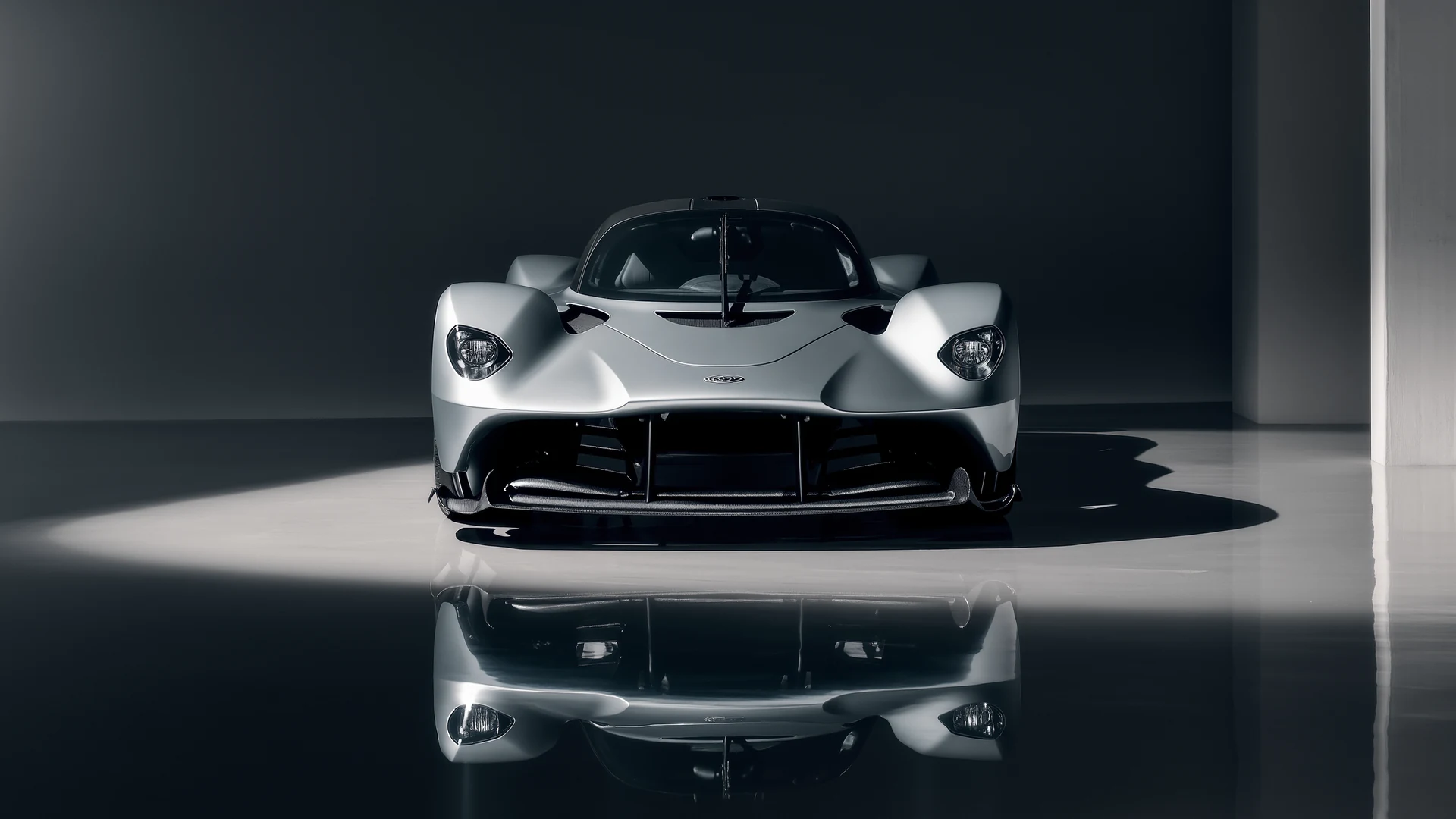
Before buying a supercar, weigh new versus pre-owned, study model-specific depreciation, pay for a thorough PPI, and budget for financing, options, transport, and protection.
Key Takeaways
- A two-year-old Ferrari 296 GTB under 5,000 miles trades for $290,000 to $320,000, saving $60,000 to $130,000 over a well-specified new car at $380,000 to $420,000.
- Production volume drives depreciation: Porsche GT cars and limited Ferrari V12s like the 812 Superfast and F12tdf hold or gain, while mass-produced McLarens and Aston Martins drop hardest.
- A Pre-Purchase Inspection costs $800 to $2,500 and must include a paint-depth meter, full ECU diagnostic scan, borescope, and DCT clutch wear readout; walk away from any seller who refuses one.
- Specialty lenders like Woodside Credit, JJ Best Banc, and Putnam Leasing offer 6.0% to 9.5% rates for FICO scores above 740, with terms extending to 144 months and optional balloon structures.
- Auction buyer's premiums add 5% to 12% on top of the hammer price, so a $300,000 winning bid can cost $315,000 to $336,000 after fees plus transport.
- Key options such as Ferrari Scuderia shields, front-axle lift, carbon steering wheel, and Porsche PCCB and Weissach Package directly raise resale value, while odd colors extend time on market.
- Enclosed transport ($1,500 to $4,000) and Paint Protection Film ($3,000 to $15,000) are minimum standards of care that preserve value far beyond their cost.
🌐 Also available in: Deutsch
Deciding Between New and Pre-Owned
Your first major decision when buying a supercar is whether to buy new or pre-owned, and the financial implications are enormous. A brand-new Ferrari 296 GTB starts around $340,000 before options. Typical option selections, carbon-fiber racing seats, front-axle lift system, Scuderia fender shields, colored brake calipers, premium audio, and a few aesthetic touches, add $40,000 to $80,000. A well-specified 296 GTB therefore lands between $380,000 and $420,000. A two-year-old example with under 5,000 miles can be found for $290,000 to $320,000. That is a savings of $60,000 to $130,000 for what is functionally the same car with the same 819-horsepower hybrid V6 drivetrain, the same 2.4-second 0-to-60 sprint, and the same dual-clutch eight-speed gearbox.
Similarly, a new Lamborghini Huracán STO commands approximately $330,000 base and climbs past $380,000 with options. Yet 2021 examples with delivery mileage trade between $280,000 and $310,000 on the open market. A new McLaren 750S lists at $330,000 for the coupe, while 2024 examples with under 2,000 miles appear at $260,000 to $290,000. The trade-off for buying pre-owned is that you lose the ability to specify every detail through the manufacturer’s bespoke program, and you inherit whatever color, interior leather, and option configuration the first owner selected.
New supercars carry the obvious appeal of being factory-fresh. They come with a full manufacturer warranty, zero wear, and the full brand experience, factory delivery in Maranello, Sant’Agata, or Woking, personalized build plaques, and access to exclusive owner events. For brands like Ferrari and Porsche, purchase history with an authorized dealer is the gateway to limited-edition allocations. Buy a new Roma Spider and a new 296 GTB from the same Ferrari dealer, and you stand a far better chance of securing a future 812 Competizione allocation. This dealer-relationship dynamic is enormously valuable, and it is one of the few genuinely defensible reasons to absorb first-year depreciation.
The depreciation hit varies dramatically by brand and model. A new McLaren Artura at $237,000 may lose $30,000 to $50,000 in its first year. An Aston Martin DB12 at $250,000 may shed $40,000 to $60,000. Meanwhile, a Porsche 911 GT3 Touring at $183,000 typically loses zero dollars, many trade above sticker immediately because production is constrained and demand outstrips supply by a wide margin. Understanding where a given model sits on this depreciation spectrum is the most important pre-purchase analysis you can perform.
Understanding Depreciation Curves
Not all supercars depreciate equally. Porsche GT products, the 911 GT3, GT3 RS, GT3 Touring, and GT2 RS, are famously resilient. A 2016 991.1 GT3 RS that stickered at $176,000 still trades near $190,000 to $210,000 a decade later. The 991.2 GT2 RS with Weissach Package listed at $325,000 in 2018, and low-mileage examples now command $380,000 to $450,000. The 911 R, 991 units built, stickered at $185,000 in 2016, briefly spiked past $500,000 during the speculative mania, and has settled around $300,000 to $350,000. Limited-production Ferraris with naturally aspirated V12s, including the 812 Superfast and F12tdf, hold value well. The F12tdf listed at $490,000 new and remains above that figure, typically $850,000 to $1,100,000, on the secondary market.
Conversely, McLaren has struggled with depreciation across much of its Sports and Super Series. A 2018 720S that cost $285,000 new can now be purchased for $160,000 to $185,000. The 570S dropped from $190,000 to under $120,000 over a similar period. The exception is McLaren’s Ultimate Series, the P1, Senna, Speedtail, and Elva, which have appreciated substantially. Aston Martin’s non-limited production models like the DB11 and DBS Superleggera also see steep depreciation, with DBS examples falling from $316,000 new to $170,000 to $200,000 in three to four years. The lesson: production volume drives depreciation more than any other factor. Mass-produced supercars depreciate. Limited-production cars hold or gain.
Pre-Purchase Inspection (PPI): The Non-Negotiable Step
A Pre-Purchase Inspection: universally abbreviated as PPI, is the most important money you will spend during the buying process. Expect to pay $800 to $2,500 for a thorough PPI from a marque specialist or authorized dealer. The inspection must include a paint-depth meter reading across every exterior panel to identify repainted sections. Factory paint on modern supercars measures 100 to 180 microns. A reading above 250 microns on any panel indicates bodywork and repainting. A reading below 80 microns suggests a replacement panel. Either finding should trigger deeper investigation.
The PPI must also include a full diagnostic scan of all ECUs (engine, transmission, ABS, airbag, body control) to check for stored fault codes, over-rev events, and mileage discrepancies. A borescope inspection of cylinder walls is critical for flat-plane-crank engines, particularly the Ferrari 458 and F8 Tributo, where excessive bore scoring or carbon buildup can signal impending engine failure. For dual-clutch cars, the technician must read the clutch wear index from the transmission control unit. Ferrari and McLaren DCT readouts show clutch remaining life as a percentage; anything below 60% on a car with under 15,000 miles suggests aggressive use. A full suspension and underbody inspection completes the PPI, checking for leaking dampers, torn CV boots, and underbody damage from speed bumps or driveway aprons. Walk away from any seller who refuses a PPI. There is no innocent explanation for refusing an independent inspection.
Financing a Supercar
Supercar financing differs materially from conventional auto loans. Specialty lenders, Woodside Credit, JJ Best Banc, and Putnam Leasing, dominate the space. Interest rates for well-qualified buyers with a FICO score above 740 range from 6.0% to 9.5% as of mid-2026, heavily dependent on the age and price of the vehicle. Terms commonly extend to 144 months (12 years) to keep monthly payments manageable on six- and seven-figure purchases. A $400,000 supercar financed at 7.5% over 144 months carries a monthly payment of approximately $4,200. The same car over 84 months at the same rate jumps to roughly $6,100.
Many buyers use balloon financing, where a large residual payment, typically 30% to 40% of the purchase price, is deferred to the end of the loan term. On a $400,000 car with a 35% balloon, the regular payments are calculated on $260,000, dramatically reducing the monthly outlay. However, when the balloon comes due, you must either refinance, sell the car, or pay the residual in cash. This structure works well for buyers who plan to exit the car before the balloon matures, but it creates a cliff that can be financially catastrophic if the car’s market value falls below the balloon amount.
Leasing is less common in the supercar world than in luxury sedans, though some manufacturers offer it. Ferrari Financial Services and Porsche Financial Services provide competitive captive rates. Porsche’s lease programs on the 911 Turbo S and Taycan Turbo are particularly attractive, with residuals that Porsche subsidizes to move metal. Ferrari leasing is rare, the brand prefers to finance, but it is available through select dealers for clients with substantial portfolios. Manufacturer financing generally requires a deposit of 20% to 30%.
Where to Buy: Dealers, Private Parties, and Auctions
Authorized franchise dealers offer the safest experience. Their pre-owned inventory is typically acquired through trade-ins or lease returns, and they perform multi-point inspections before listing a car for sale. Many offer limited warranties, often 1 year or 12,000 miles, on pre-owned inventory. The premium for buying from a Ferrari or Lamborghini dealer versus a private party ranges from 5% to 10%. On a $350,000 car, that is $17,500 to $35,000, but it buys peace of mind and often includes a freshly completed annual service.
Independent exotic specialists, Marshall Goldman, Curated, Cats Exotics, iLusso, and Exclusive Motorcars, occupy the middle ground. They stock large inventories, often 50 to 150 cars, and typically provide in-house financing. Prices fall between franchise dealers and private parties. Verify their reputation through enthusiast forums like FerrariChat, Rennlist, and Lamborghini-Talk. Search the dealer’s name plus terms like “lawsuit,” “title issue,” or “undisclosed damage.” The enthusiast community is small, and bad actors are well documented.
Private-party purchases offer the lowest prices but the highest risk. Never wire funds without physically inspecting the car or hiring a trusted third-party inspector. Use an escrow service like Escrow.com for remote transactions, it holds the buyer’s funds until the car is delivered and accepted, protecting both parties. Online auctions, Bring a Trailer and Collecting Cars, have democratized the supercar market, but they come with buyer’s premiums of 5% to 12% on top of the hammer price. A car that hammers at $300,000 on Bring a Trailer costs the buyer $315,000 after the 5% premium, plus transport. Live auction houses, RM Sotheby’s, Gooding & Company, Broad Arrow, add 10% to 12% buyer’s premiums. Always factor these costs into your bidding limit.
Must-Have Options and Specifications
Certain options dramatically affect resale value and desirability. For Ferrari, the Scuderia fender shields, the iconic yellow shields on the front fenders, are a near-universal requirement among informed buyers. A Ferrari without shields typically trades at a $5,000 to $15,000 discount to an identical car with them, and it sits on the market weeks or months longer. The carbon-fiber steering wheel with LED shift lights is another high-demand option costing roughly $5,000 that nearly every buyer expects. Front-axle lift systems are practically mandatory on cars like the Ferrari 488, F8, and 296 GTB. Cars without lift scrape on speed bumps, driveway aprons, and parking garage ramps. Owners of non-lift cars report significant front splitter damage within the first year of ownership, and replacement splitters run $3,000 to $8,000. The lift is a $5,000 to $8,000 option that pays for itself in avoided damage.
For Porsche GT cars, the Weissach Package adds a carbon-fiber roof, anti-roll bars, mirror caps, and interior trim. On the GT2 RS, it also includes magnesium wheels that save 11.5 kg (25 lbs) of unsprung weight. Cars with the Weissach Package command a $15,000 to $30,000 premium on the used market. Porsche Ceramic Composite Brakes, PCCB, are standard equipment expectations at this price point. A GT3 without PCCB trades at a measurable discount, and buyers should expect to spend the $9,000 option cost if ordering new.
Color matters enormously. Resale-friendly colors include Rosso Corsa, Rosso Mugello, and Giallo Modena for Ferrari; Verde Mantis, Arancio Borealis, and Bianco Icarus for Lamborghini; and Guards Red, GT Silver, or Chalk for Porsche. Highly personalized specifications, unusual interior leather colors like Cuoio brown, painted deviated stitching in odd combinations, or matte exterior finishes, narrow your resale audience and extend time on market. A Paint-to-Sample Porsche can add significant value if the color is universally adored (Gulf Blue, Irish Green, Signal Yellow, Oak Green Metallic), but it can be a liability if the color is divisive (Magenta, Lizard Green, or pastel shades). When in doubt, choose a heritage color associated with the brand’s motorsport history.
Post-Purchase: Delivery, Break-In, and First Steps
If you buy remotely, enclosed transport is mandatory. Services like Reliable Carriers, Plycar, and Intercity Lines specialize in exotic vehicles. Expect to pay $1,500 to $4,000 for coast-to-coast enclosed transport. An open carrier exposes the car to road debris, weather, and vandalism. The cost savings of $500 to $1,000 are trivial relative to the vehicle’s value, and a rock chip to the hood of a supercar is a multi-thousand-dollar paint repair, assuming the specific paint formula can even be matched.
Respect the break-in period. Most manufacturers specify 1,000 to 2,000 km (620 to 1,240 miles) of restrained driving. Keep revs below 4,000 to 5,000 RPM and avoid full-throttle applications. The break-in period allows piston rings to seat properly, gear surfaces to bed in, and differential and transmission components to wear in a controlled manner. Ferraris display a break-in indicator on the tachometer, LED shift lights at 6,000 or 7,000 RPM rather than the full 8,000 RPM, that moves to the full redline after the initial distance is covered. Violating break-in procedures can cause increased oil consumption, premature bearing wear, and compression loss that shows up on subsequent diagnostic scans, directly hurting resale value.
Immediately after purchase, invest in Paint Protection Film (PPF). A full-frontal application, bumper, full hood, front fenders, mirror caps, and rocker panels, costs $3,000 to $7,000. Full-body PPF runs $8,000 to $15,000. Combined with a ceramic coating over the PPF, this preserves the factory finish and makes cleaning dramatically easier. Educated buyers increasingly treat PPF as a requirement, and a car without it that has accumulated stone chips will take a valuation hit far exceeding the cost of the film. If you plan to track the car, PPF the rear quarter panels and the area behind the rear wheels as well, track debris and tire marbles at high speed cause damage in these zones that street driving does not.
Key Takeaways
- PPI is mandatory and non-negotiable: Spend $2,000 on a borescope, DCT readout, paint meter, and ECU scan. Refuse to buy from any seller who objects. A $2,000 inspection is cheap insurance against a $40,000 engine rebuild.
- Depreciation varies wildly by brand and production volume: Porsche GT cars and limited Ferrari V12s hold or gain. Mass-produced McLarens and Aston Martins drop hardest. Research the specific model’s depreciation history before you commit.
- Options directly impact resale: Ferrari shields, front lift, carbon steering wheel, and PCCB are de facto requirements. Odd colors and missing key options cost you thousands at resale and extend time on market by months.
- Financing terms are uniquely generous in this market segment: 144-month terms with balloon structures keep payments manageable, but the balloon cliff is real. Run the numbers on worst-case residual value scenarios before signing.
- Buyer’s premiums at auction add 5% to 12% to the hammer price: A $300,000 winning bid costs you $315,000 to $336,000 after premiums. Factor this into your maximum bid before the auction starts, not after.
- PPF, ceramic coating, and enclosed transport are not optional extras: They are the minimum standard of care for a supercar. Skip them and you will pay more in diminished value at resale than the cost of doing it right the first time.
Financing Pitfalls and How to Avoid Them
Balloon financing, while attractive for reducing monthly payments, carries a specific risk that catches buyers unprepared. If the car’s market value at balloon maturity is below the balloon amount, you face negative equity, you owe more than the car is worth. This scenario is common with McLaren and Aston Martin products that depreciate faster than the loan amortizes. Before signing a balloon loan, model the car’s projected depreciation using historical data from the specific model. If a three-year-old 720S is worth 55% of its original MSRP, and your balloon at year five is 65% of the original financed amount, you will be underwater at maturity. Plan for this in advance. Some buyers mitigate balloon risk by making additional principal payments during the loan term, reducing the balloon amount ahead of schedule. Others structure the purchase through an LLC, which can provide tax advantages and liability separation. Consult a CPA who specializes in high-value vehicle acquisitions, the tax treatment of sales tax, registration, and depreciation on a vehicle used partially for business purposes is complex and varies by state. A poorly structured purchase can cost tens of thousands in unnecessary taxes. A properly structured one can save the same amount.
Post-Purchase Documentation and Records
From the moment you take delivery, maintain a detailed ownership file. This should include the purchase agreement, the window sticker (Monroney label), every service invoice, photographs of the odometer at each service interval, records of any paint correction or PPF work, and a log of fuel stops if you are tracking operating costs. When you eventually sell the car, whether in two years or twenty, this documentation distinguishes your car from every other example on the market. A car with complete, organized records sells faster and for more money than an identical car with no history. The premium for documented history ranges from 3% to 8% of the car’s value, $9,000 to $24,000 on a $300,000 car. There are few investments in life that pay this reliably for the effort of keeping a folder.
Frequently Asked Questions (FAQ)
Is it better to buy a new or pre-owned supercar like the Ferrari 296 GTB?
Pre-owned usually offers enormous savings: a two-year-old 296 GTB under 5,000 miles runs $290,000 to $320,000 versus $380,000 to $420,000 well-specified new, for a functionally identical car. New buying secures factory warranty, bespoke specification, and dealer relationships that unlock future limited-edition allocations from brands like Ferrari and Porsche.
Which supercars hold their value best and which depreciate fastest?
Porsche GT products and limited-production Ferrari V12s hold or gain value, with the F12tdf rising from $490,000 new to $850,000 to $1,100,000. Mass-produced cars fall hardest: a 2018 McLaren 720S dropped from $285,000 to $160,000 to $185,000, and Aston Martin DBS examples fell from $316,000 to $170,000 to $200,000. Production volume drives depreciation most.
What should a supercar Pre-Purchase Inspection include?
A thorough PPI, costing $800 to $2,500, must include a paint-depth meter reading on every panel, a full diagnostic scan of all ECUs for fault codes and over-revs, a borescope of cylinder walls for flat-plane-crank engines, and a DCT clutch wear readout. Factory paint reads 100 to 180 microns; above 250 indicates repainting. Always walk away from sellers who refuse.
How does financing a supercar work and what rates can I expect?
Specialty lenders like Woodside Credit, JJ Best Banc, and Putnam Leasing dominate supercar financing. Well-qualified buyers with a FICO above 740 see rates of 6.0% to 9.5% as of mid-2026, with terms up to 144 months. A $400,000 car at 7.5% over 144 months runs about $4,200 monthly, versus roughly $6,100 over 84 months.
What is balloon financing and what are its risks on a supercar?
Balloon financing defers a residual of 30% to 40% of the purchase price to the loan's end, lowering monthly payments. On a $400,000 car with a 35% balloon, payments are calculated on $260,000. The risk is negative equity: if the car's market value falls below the balloon amount at maturity, common with fast-depreciating McLaren and Aston Martin models, you owe more than the car is worth.
Which supercar options most affect resale value?
Ferrari Scuderia fender shields are near-universal; a car without them trades at a $5,000 to $15,000 discount and sells slower. Front-axle lift ($5,000 to $8,000) prevents splitter damage, while the carbon steering wheel adds demand. For Porsche GT cars, the Weissach Package commands a $15,000 to $30,000 premium, and PCCB brakes are expected at this price point.
What are the safest places to buy a used supercar?
Authorized franchise dealers offer the safest experience with multi-point inspections and limited warranties, at a 5% to 10% premium over private parties. Independent exotic specialists like Marshall Goldman, Curated, and iLusso occupy the middle ground. Private-party deals are cheapest but riskiest; use an escrow service like Escrow.com, and verify dealers on forums such as FerrariChat and Rennlist.
What post-purchase steps protect a supercar's value?
Use enclosed transport ($1,500 to $4,000) instead of open carriers, respect the 1,000 to 2,000 km break-in by keeping revs below 4,000 to 5,000 RPM, and apply Paint Protection Film ($3,000 for front, up to $15,000 full-body). Maintain a detailed ownership file with service invoices and the window sticker; documented history adds a 3% to 8% resale premium.
More from Magazine

Future of Supercars – Electric Revolution and Beyond
The future of supercars: Ferrari’s 2025 electric flagship, Porsche’s synthetic eFuel, Rimac’s record-breaking EVs and why the V12 su…
Supercar Technology Innovation Guide – The Future of Performance
Supercar technology guide: how carbon-fiber tubs, active aero, hybrids, dual-clutch gearboxes and software shape performance in the McLaren, Ferrari a…

Supercar Rental Worldwide Guide – Drive Your Dream Car Today
Supercar rental guide: daily rates from $500 to $20,000+, security deposits, insurance rules, top locations worldwide, and track packages explained.…